
Every spring the same question shows up in every pressure washing Facebook group: “What are you all paying per lead on Google?” And every spring the answers come back scattered from $15 to $150, with nobody naming their market, their season or their close rate. If you have been trying to pin down a real cost per lead for pressure washing, that thread is exactly why you cannot.
This article does what those threads do not. You will get the published benchmark numbers with their sources named, the reasons the ranges are so wide, the cost-per-booked-job math that matters more than any CPL, and the levers that actually bring your number down. We manage Google Ads for pressure washing companies, so these are the questions we answer for a living.
How Much Does a Pressure Washing Lead Cost on Google Ads?
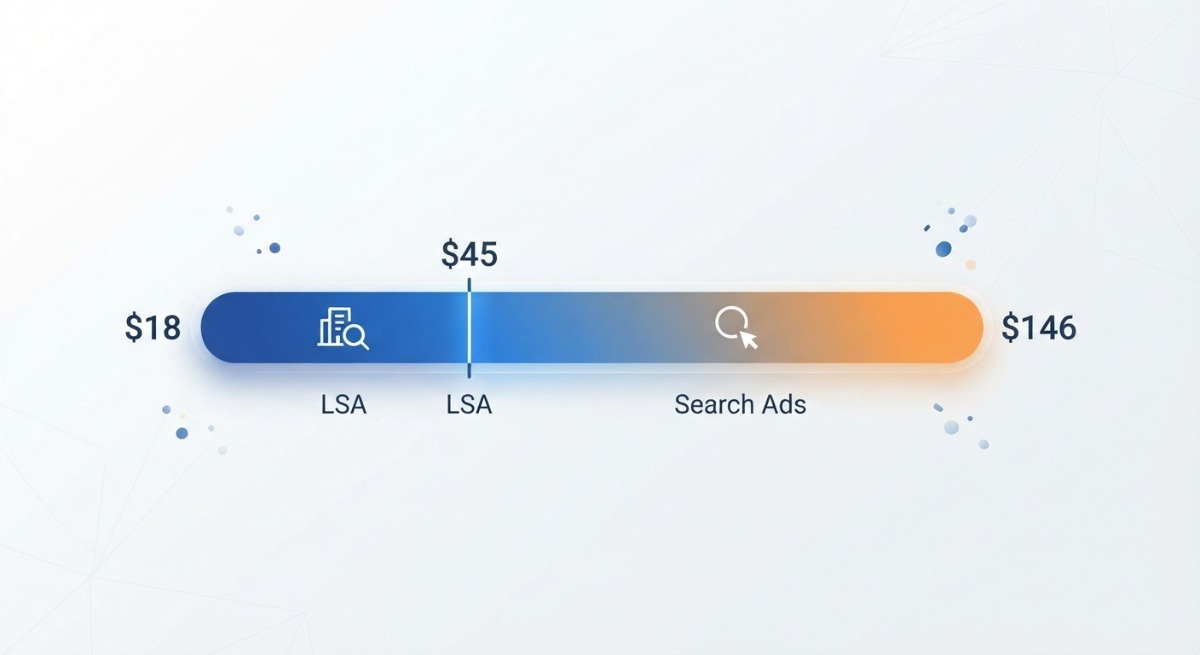
Published 2026 data puts pressure washing cost per lead between roughly $18 and $68 on Google Local Services Ads and roughly $60 to $146 from Google search ads, with broader home services benchmarks averaging $46.99 to $90.92 per lead. Your market, season and follow-up speed decide where you land.
Here are the numbers at a glance, each with its source:
- Google Local Services Ads, pressure washing: average $38.41, median $47.35, typical range $24.09 to $62.37, per the 99 Calls LSA cost estimator, September 2026, based on a small 4-campaign sample
- Google LSA, vendor-published nationwide range: $18 to $68 per lead, from the same vendor’s wider client base, stated as a 10th to 90th percentile range
- Google search ads leads, vendor-published nationwide range: $60 to $146 per lead, same source
- Home and Home Improvement search benchmark: $8.33 average cost per click, $90.92 average cost per lead, 6.47% click-through rate, 8.05% conversion rate, per WordStream’s 2026 Google Ads benchmarks, 13,474 US campaigns, April 2025 to March 2026
- Nearest named subcategories: cleaning services at $8.50 CPC and $46.99 CPL with a 17.65% conversion rate, and window cleaning at $9.12 CPC and $66.69 CPL, per LocaliQ’s home services benchmarks, 3,211 campaigns, April 2024 to March 2025
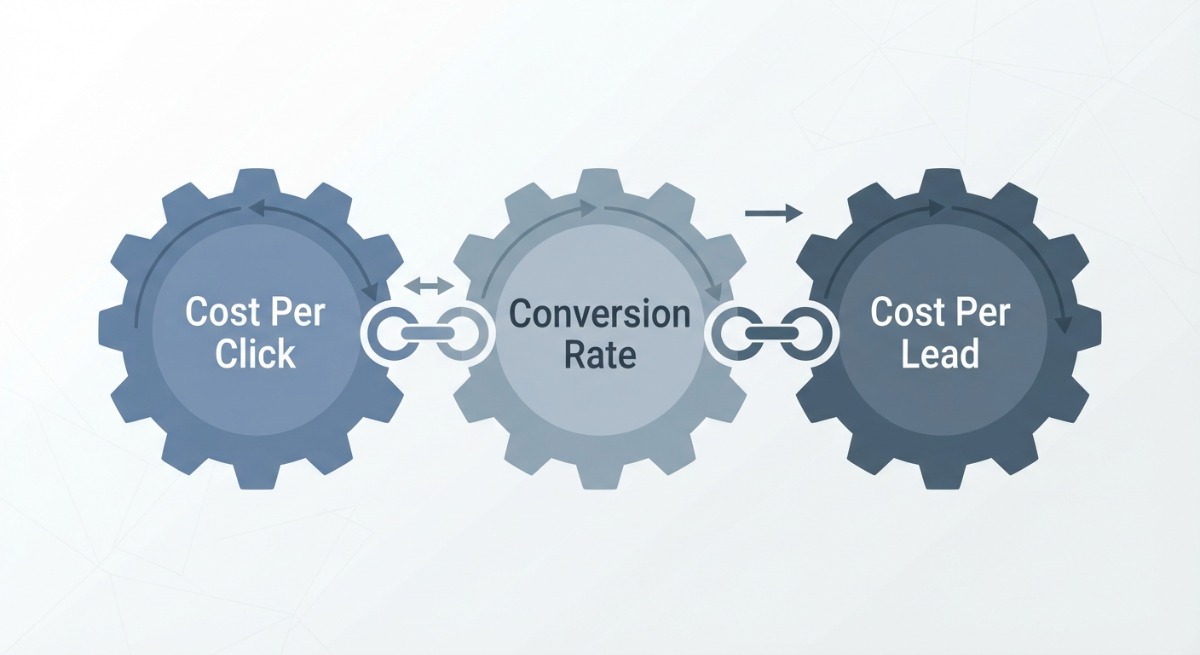
Quick translations, since we promised plain English. CPC is cost per click, what you pay when someone clicks your ad. CPL is cost per lead, what you pay for someone who actually contacts you. Conversion rate is the percentage of clicks that become leads. Those three numbers are chained together, which is where the wide ranges come from.
Why Is the Range So Wide? The 6 Things That Move Your Number
Nobody’s CPL matches the benchmark exactly, and here is why. Six drivers, each one worth checking against your own situation.
Your Market’s Competition
Google Ads is an auction, so your price depends on who else is bidding. A Hartford bid environment is not a rural one, and high-intent terms like “pressure washing near me” have been reported anywhere from $8 up to $25 per click in competitive markets, per 2026 pressure washing PPC guides. Same keyword, triple the price, purely by zip code.
The Season You Are Buying In
Spring surge demand pushes auction prices and lead volume up together, and shoulder months do the reverse. Northern markets like Connecticut compress the whole season further, which means a March CPL and a July CPL from the same account can look like two different businesses.
The Service You Are Advertising
Driveway cleaning clicks are not roof washing clicks. Ticket size and competition differ by service, and the LocaliQ dataset proves the pattern at category scale: roofing averages a $228.15 CPL while cleaning services average $46.99 in the same report. What you advertise moves what you pay.
Search Ads vs Local Services Ads
Search ads charge per click, and clicks that do not convert are money spent on nothing. LSA charges per lead, which typically lands cheaper for this trade, but caps your volume and control. One update worth knowing: the Google Guaranteed money-back program was retired in November 2025 and badges moved to the Google Verified era, so any article still describing Google Guaranteed is out of date.
Your Landing Page and Offer
A click is not a lead. Conversion rate is what turns CPC into CPL, and the math is unforgiving: at the WordStream home category averages of $8.33 per click and 8.05% conversion, a lead computes to roughly $103. Beat that conversion rate and your CPL drops without touching a bid. This is why the landing page is the whole game.
Your Speed to Lead
The invisible multiplier. Leads decay in minutes, and a lead that waits until tomorrow for a callback often books elsewhere today. Slow follow-up does not show up in your ads dashboard, but it quietly doubles your effective cost per booked job. More on this below, because it is the cheapest fix on this page.
The Number That Matters More: Cost Per Booked Job
CPL gets all the attention in the Facebook threads. It is the wrong number to argue about.
The Simple Math
Cost per booked job equals your CPL divided by your booking rate. Take the 99 Calls LSA average of $38 per lead. At a 50% booking rate, that is a $76 booked job. At a 25% booking rate, the same $38 lead becomes a $152 booked job. Same ads, same spend, double the real cost, and the difference happened on the phone, not in the ad account.
This is also why comparing raw CPLs between two companies tells you almost nothing. The owner paying $70 per lead and booking 6 in 10 is buying jobs cheaper than the owner paying $35 per lead and booking 2 in 10. If you do not know your own booking rate, that is the first number to start tracking this week, because every other number in this article is meaningless without it.
Against the Average Ticket
Now put that against what a job pays. Reported average residential wash tickets run roughly $400 to $800, per 2026 pressure washing PPC guides. At those tickets, even a $100 cost per booked job can be a strong return. The panic about a $60 lead is usually misplaced when the booking rate and ticket size behind it are healthy.
What a Good Cost Per Lead Actually Means
A good cost per lead is one your close rate and average ticket turn profitable, not the lowest number in a Facebook thread. Judge every CPL against the booked job it produces and the ticket that job pays, and the benchmarks become tools instead of anxiety.
Buying Leads vs Running Your Own Ads: The Honest Referee
The other spring debate. Both sides have a real case, so here is the referee’s version.
What Lead Vendors Offer
Per-lead pricing with no setup effort and a fast start. As one example, a national vendor publishes $24.99 organic leads, $18 to $68 LSA leads and $60 to $146 search ads leads. For a brand-new operator with no website, no reviews and jobs needed this month, that speed has genuine value.
What Running Your Own Ads Offers
Ownership. The ad account, its data, the landing pages and every customer relationship are yours. Costs compound in your favor as your quality score, conversion rate and review base improve. And when you pause, you keep the asset: the account history, the pages, the customer list. When you stop paying a lead vendor, you keep nothing.
The Deciding Question
Short-term cash flow versus long-term asset. Our honest guidance: brand-new operators sometimes bridge the first season with bought leads, and there is no shame in it. Growth-stage companies should own their pipeline, because the compounding only works on an asset you control.
Two practical checks before you sign with any lead vendor, whoever it is. Ask whether the leads are exclusive or shared, because a shared lead is a race against three other companies and your effective cost per booked job climbs accordingly. And ask what happens to your listings, pages and phone numbers when you cancel, because the answer tells you whose asset you have been funding.
What We See Running Ads for a Real Pressure Washing Company
We run Google Ads and the full growth system for Mr-Suds Power Washing PROs in Newington CT, now expanding into Hartford, and it is also the business we test our own advice on before giving it to anyone else.
Here is what surrounds those ads. Every lead the campaigns generate, along with every call and form fill, lands in our white label CRM, which currently holds 474 contacts for this one company. Automated follow-up chases every estimate that goes quiet. And a 5.0 rating across 39 reviews does silent work on every landing page visit, converting clicks that would otherwise bounce. The full system is laid out on our digital marketing for pressure washing companies in Connecticut page, and the reviews speak on our real client reviews page.
The practitioner lesson we would underline twice: the biggest CPL improvements we consistently see do not come from bid tweaks. They come from what happens after the click and after the call: landing page match, review proof, and follow-up speed. Owners hunt for savings inside the ad auction while the real leak is a quote sitting unanswered in someone’s voicemail. That is an observation from running these accounts, not a measured statistic, and it is the most repeatable one we have.
The Connecticut Wrinkle
One seasonal note for our fellow northern operators. A Connecticut season compresses most of the year’s revenue into roughly March through November, which changes monthly budget logic completely compared to the sunbelt advice in national articles. We shift budgets up into the spring surge and taper through late fall rather than spreading spend evenly, because the auction and the demand both live on that curve.
How to Lower Your Cost Per Lead: 5 Levers Ranked by Effort
Ranked from free to ongoing, because the order most owners try them in is exactly backwards.
Lever 1. Answer Faster (Free)
Speed to lead is the cheapest CPL cut available because it raises your booking rate without touching the auction. Do this: set up missed call text back so every unanswered call gets an instant text. In our client setups, that instant text is what starts the conversation before the homeowner dials the next company, and it is the same problem our AI receptionist solves on the phone side.
Lever 2. Match the Landing Page to the Ad (Low Effort)
Do this: send each ad to a service-specific page with prices or ranges, town names, reviews and one clear form. Above the fold on our washing pages: the service, the town, the star rating and the phone number, before anything else. Beating the 8.05% category conversion average directly divides your CPL.
Lever 3. Tighten Keywords and Negatives (Low Effort)
Do this: add negative keywords for DIY, rental and job-seeker queries, focus budget on high-intent local terms, and read your search terms report weekly. Ten minutes a week stops you buying clicks from people looking for a pressure washer to rent.
Lever 4. Run LSA Alongside Search (Medium Effort)
Do this: set up Local Services Ads next to your search campaigns, so the cheaper per-lead channel captures what it can while search covers the demand LSA misses. Your profile completeness, review count and response speed drive how often LSA shows you, so this lever feeds on the others.
Lever 5. Feed the Machine Reviews and Photos (Ongoing)
Do this: request a review after every job and photograph every job. Review count and rating lift both your LSA ranking and your landing page conversion at once, and real job photos beat stock photography everywhere they appear, including the ad creative itself. Fresh content from real jobs also feeds this loop, which is exactly what our guide to AI reels for pressure washing covers.
If you would rather have these levers pulled for you, that is literally the job. Book a free growth call and we will walk through your account together.
How Much Should You Budget? A Worksheet You Can Steal
Work backward from jobs, never forward from a random budget. The chain:
- Decide the extra jobs you want per month. Say 20.
- Divide by your booking rate to get leads needed. At 40%, you need 50 leads.
- Multiply by a benchmark CPL range. At $46.99 to $90.92 (the LocaliQ cleaning subcategory to the WordStream home category average), 50 leads costs roughly $2,350 to $4,550 per month.
- Cross-check that against published budget guidance, which suggests $500 to $1,500 monthly for small operators and $3,000 to $5,000 for larger operations in competitive markets, per 2026 pressure washing PPC guides. The two frames agree once you scale the job target: a solo operator hunting 5 extra jobs a month needs a fraction of the spend a three-truck operation needs.
One caution: starting budgets below a few hundred dollars a month rarely exit Google’s learning phase in competitive metros. Spreading too little spend across too many clicks teaches the algorithm nothing and teaches the owner that “ads don’t work.”
And one planning note for seasonal markets: do not divide your annual ad budget by twelve. Weight it toward the months your customers actually buy, hold a floor budget through the slow months to keep the account learning, and revisit the worksheet each quarter as your booking rate and ticket data improve. The worksheet is a starting point, and your own numbers should replace the benchmarks in it within 90 days.
Track your leads once they arrive, or the whole worksheet is guesswork. A simple CRM with automated follow-up covers it, and we compared the main options in our guide to the best CRM for pressure washing businesses.
FAQ: Cost Per Lead for Pressure Washing
How much does a pressure washing lead cost on Google Ads?
Published 2026 figures put Google search ads leads at roughly $60 to $146 nationwide, while broader home services benchmarks average $46.99 to $90.92 per lead. Local Services Ads run cheaper, roughly $18 to $68 per lead. Market competition, season and your landing page decide where you fall.
What is a good cost per lead for pressure washing?
One your economics support, not a fixed dollar number. If your booking rate is 40% and your average ticket is $500, even an $80 lead produces a $200 booked job and a strong return. Judge cost per booked job against ticket size, not the raw CPL.
How much do Google Local Services Ads cost for pressure washing?
Recent published estimates show an average around $38 per lead, with a typical range of roughly $24 to $62, and vendor-published nationwide ranges of $18 to $68. You pay per lead rather than per click, and your profile, reviews and response speed influence how often you appear.
How much should I spend on Google Ads for a pressure washing business?
Work backward from jobs: divide the leads you need by your booking rate, then multiply by a $47 to $91 benchmark CPL. Published guidance suggests $500 to $1,500 monthly for small operators and $3,000 to $5,000 for larger operations in competitive markets.
Why are my pressure washing leads so expensive?
Usually one of four reasons: broad or wasted keywords, a generic landing page that converts poorly, buying clicks in peak-season auctions without adjusting, or slow follow-up that quietly kills booking rate. Fixing conversion and follow-up typically moves the number more than bid changes do.
Is it better to buy pressure washing leads or run my own ads?
Buying leads starts fast with per-lead pricing but builds someone else’s asset. Running your own ads costs more effort upfront and compounds in your favor: you own the account, data and customer relationships. Many new operators bridge with bought leads, then move to owned campaigns.
Do Google Ads actually work for pressure washing?
Yes, when the whole chain works: tight local keywords, a service-specific landing page with reviews and prices, and follow-up within minutes. Category benchmarks show home services search ads converting around 7 to 8% of clicks, and companies that answer fastest book a disproportionate share.
Find Out What Your Leads Should Cost
Benchmarks tell you the range. Your account tells you the truth. Send us your last 90 days of Google Ads or LSA data and we will benchmark your CPC, CPL and booking economics against the numbers in this article, free, no obligation, in plain English. You will know exactly where you stand and which lever to pull first.
Get Your Free Growth Audit
Or book a free growth call if you are starting from zero.
MR Web Solutions, Hartford CT. Call us at +1 860 255 1070.