A pressure washing website can look great and still give Google almost nothing to rank. One page for every service, titles that say “Home,” before-and-after photos that crawl on a phone. Homeowners never find the page, so they never see your work.
Our website SEO for pressure washing fixes that from the inside: a page for every service and town you want, titles and headings that match real searches, a clean technical setup and a site that loads fast on mobile. We make the fixes ourselves, from our office in Hartford.
A homeowner in West Hartford types “roof cleaning West Hartford” into Google. Google goes looking for the page that answers that exact search best: roof cleaning, in that town, from a company that clearly does it. A homepage that mentions roofs once, next to eleven other services, rarely wins.
Website SEO for pressure washing is the work of making your site easy for Google to crawl, understand and trust, one page at a time, so every service and town you care about has a page that can rank.
It has two halves. On-page work is what people read: the pages, titles, headings, photos and answers. Technical work is what Google trips over: indexing, speed, redirects and structured data. Google also reads the mobile version of your site first, so a site that only works well on a desktop is working against you.
Your Google Business Profile handles the map, and our local SEO for pressure washing page covers that side. This page is about the website behind it, the one your profile points to.
Want to see what Google sees? The free audit shows you, page by page.
House washing, soft washing, roofs, gutters and decks, all on the homepage. It feels tidy. But Google can't tell which search that page is meant for, so it usually ranks for none of them. Each service needs a page of its own to compete.
Forty town pages with the same text and a different town name swapped in. Google's spam policies call this doorway abuse, and those pages tend to get ignored or hurt how Google sees the whole site. A few real pages beat a pile of copies.
The title tag is one of the first things Google reads, and it's the blue line people click in the results. "Home | Company Name" tells Google nothing. "Roof Cleaning in West Hartford, CT" does the job in six words.
Uncompressed before-and-after photos, a big slider up top and a stack of plugins nobody uses. On a phone in the driveway, the page drags, and the homeowner taps back. Google measures that experience through Core Web Vitals.
A "noindex" setting left on after launch, pages no menu links to, a sitemap full of old URLs. If Google hasn't indexed a page, it can't rank. Search Console shows exactly which pages are missing and why, but only if someone checks.
No LocalBusiness markup at all, or markup with an old phone number that contradicts your Google Business Profile. Structured data helps Google and AI tools connect your website to your business. Wrong data does the opposite.
The most common thing I find in a pressure washing website audit isn’t a technical disaster. It’s a site built to look good in a portfolio, with every service squeezed onto one page and nothing written for the towns the owner actually works in. The fixes aren’t glamorous: a page per service, honest town pages, a faster homepage. They’re also what changes rankings.
Founder, MR Web Solutions
This is the website half of our pressure washing SEO plan: eight kinds of work, done in the order that pays off first. Some sites need all eight. Others need two big fixes and steady upkeep. You’ll know which from the audit, before any money changes hands.
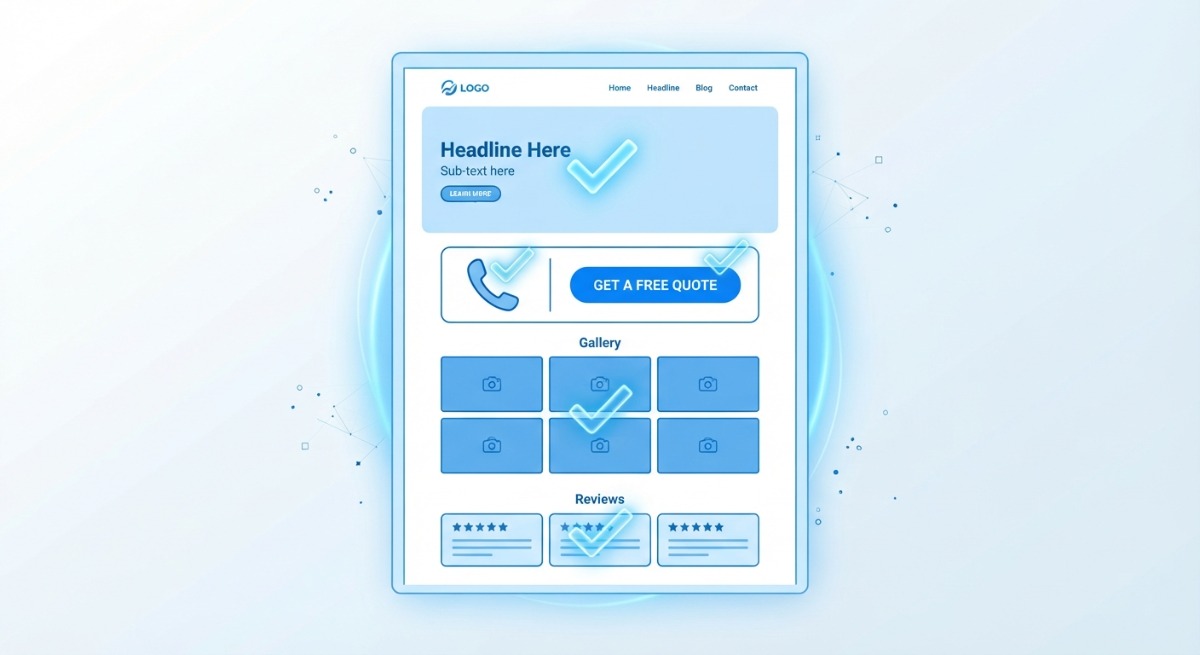
We list every service you offer and every town you want work from, then match each real search to exactly one page. Where two pages chase the same search, we merge them. Where a search has no page, we plan one.
That map becomes the plan for the whole site, so nothing gets written twice and nothing competes with itself.
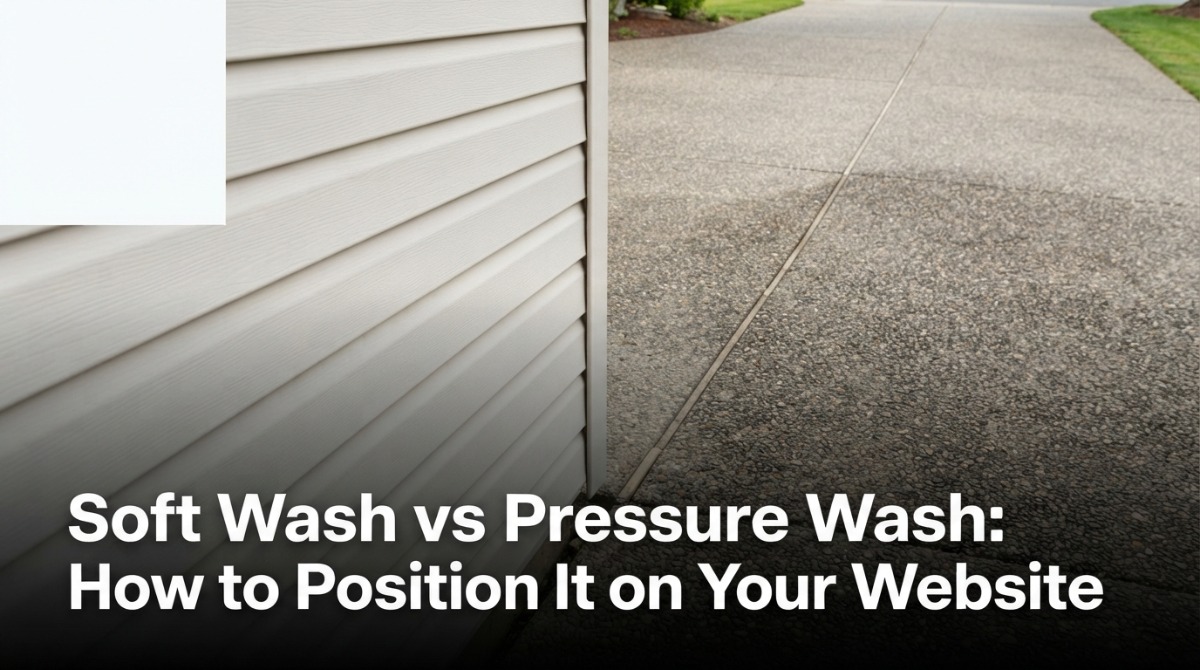
Someone researching roof cleaning wants to know if it will damage their shingles. Someone looking at soft washing wants to know what’s in the mix and whether it’s safe for the plants. Each service page answers those questions in plain language, with your own photos.
Every page gets a clear title, one H1, your process, typical price ranges if you’re comfortable sharing them and a short FAQ. Then it links to the towns where you do that job.
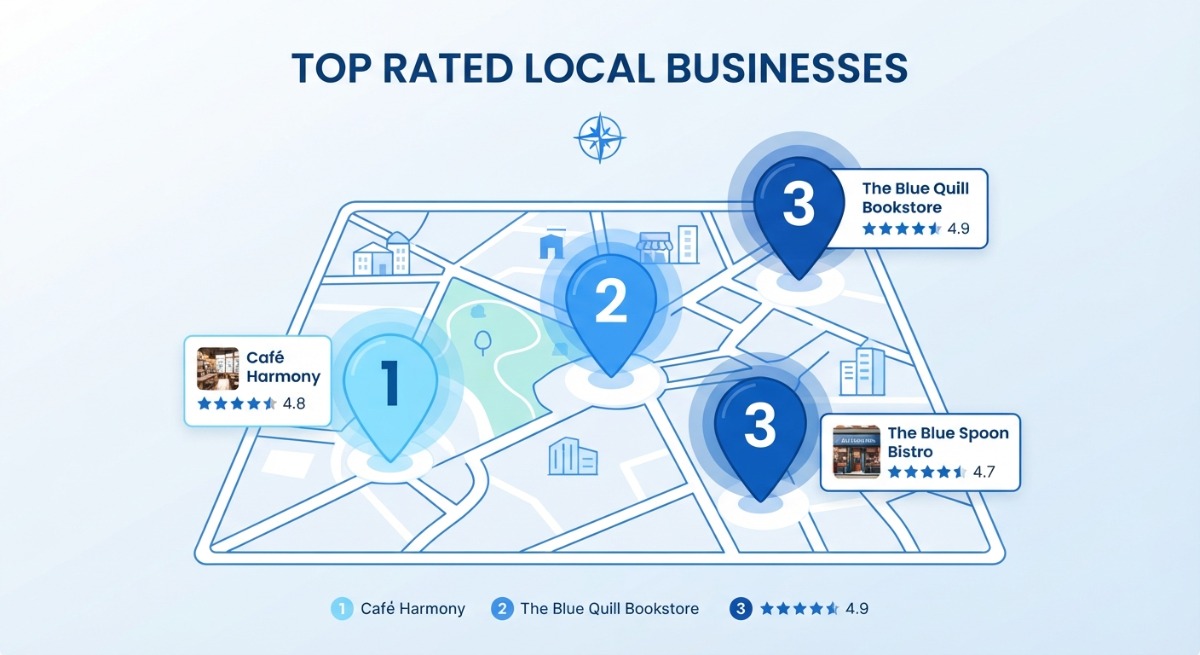
Google’s spam policies warn against pages aimed at specific cities that funnel people to one page. That’s exactly what a swapped-name town page looks like. So every page we write says something true about that town: the jobs you do there, photos from there, reviews from there.
A West Hartford page might talk about older homes with painted clapboard that need a gentle wash. A Glastonbury page might talk about long driveways and newer vinyl siding. Real detail is what makes a town page worth ranking.
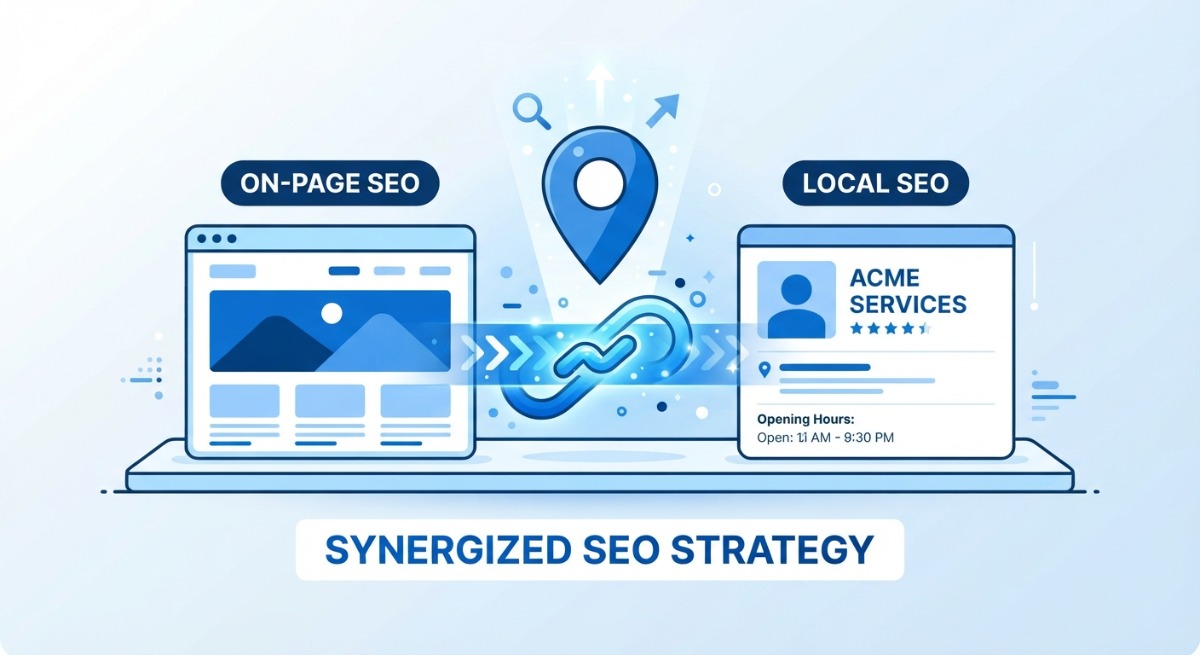
Each page gets a title with the service and the town, one H1 that matches it and headings that follow the questions people actually ask. Meta descriptions are written to earn the click, even though Google sometimes swaps in its own.
We also clean up URLs so they read like the page they belong to: /roof-cleaning-west-hartford-ct/ instead of /page-id-4417/.
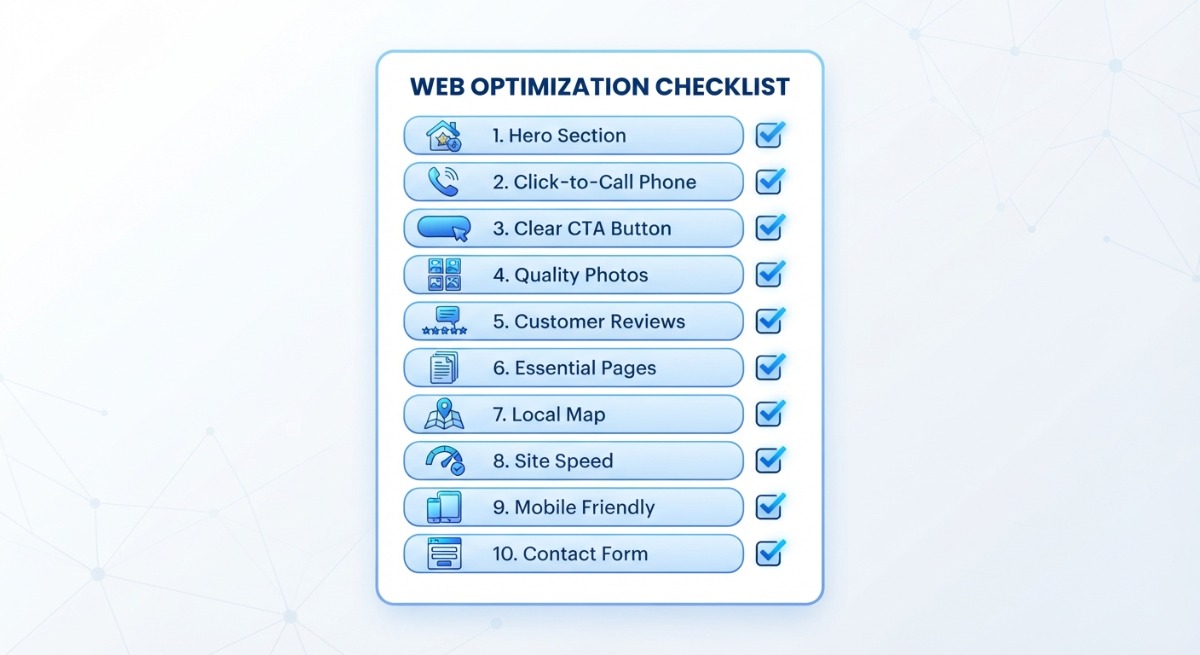
Technical SEO for pressure washing sites is mostly about removing roadblocks. We crawl your site the way Google does and check the page indexing report in Search Console for pages that were skipped, blocked or treated as duplicates.
Then we fix what turns up: stray noindex tags, a messy XML sitemap, broken links, redirect chains, missing canonical tags and old URLs from a previous site that still get visits.
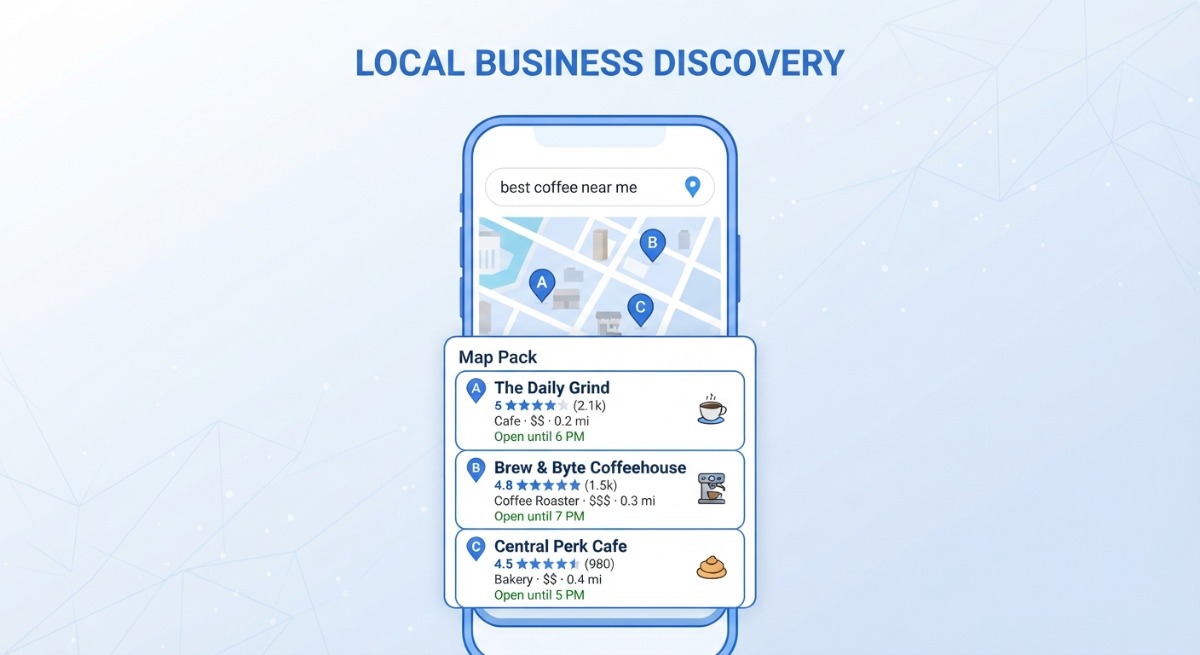
Google’s Core Web Vitals set clear targets: the main content should load within 2.5 seconds, the page should respond to a tap in under 200 milliseconds and the layout shouldn’t jump around (a CLS score under 0.1).
On pressure washing sites, the usual culprits are oversized before-and-after photos, heavy sliders and plugins nobody uses. We compress images and serve them as WebP, trim what isn’t needed and test again on mobile.
We add LocalBusiness, Service and breadcrumb markup that matches your Google Business Profile exactly: same name, address, phone and service area. It helps Google and AI tools connect your website to your business.
One honest note: Google stopped showing FAQ rich results in May 2026, so FAQ markup won’t earn you dropdowns in search anymore. It can still help machines read your answers, and our AEO for pressure washing page covers that side.

Service pages link to town pages and back, with anchor text that says what’s on the other side. Images get descriptive file names and alt text, so a photo of a clean patio in Farmington is labeled as exactly that.
Then we track what matters in GA4 and Search Console: which pages bring visitors, which searches find them and how many calls and form fills they produce. You see it all in a short monthly report.
When Mr-Suds Washing came to us, every service lived on one homepage: house washing, soft washing, roofs, gutters, decks, fences and pool decks. Google had no single page that clearly matched any one of those searches.
We rebuilt the site around 18 service pages covering general, Newington and Hartford searches, each written for one search with its own title and headings. The pages link to each other and to the Google Business Profile, so Google gets one clear picture of what the company does and where.
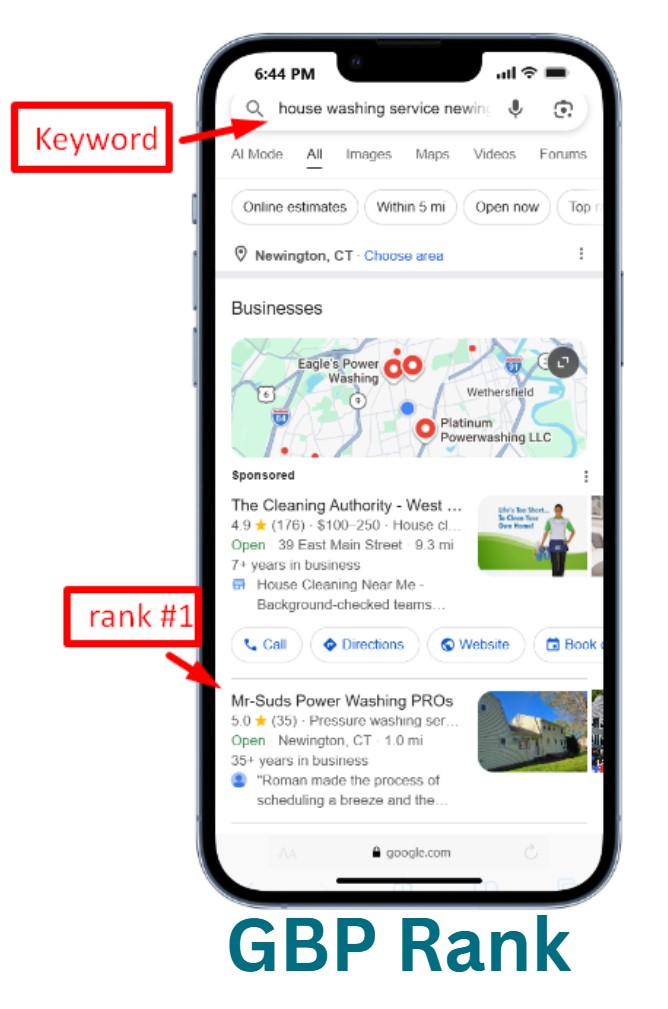
The website and the profile work were done together, so we don’t credit the pages alone. In our August 2026 rank check, Mr-Suds sits in the top three of the Newington map pack for eight of the ten keywords we track, and first for house washing, soft washing and fence washing.
Hartford is the next market, and that work is still in progress. We’ll report it the same way, whether the numbers move fast or slow.
We design and build websites for service businesses, including the Mr-Suds site. So when an SEO fix needs a new page template, a faster homepage or a rebuilt service page, we do it ourselves instead of handing you a list for someone else.
An audit that ends as a PDF doesn't change rankings. After the audit, we make the fixes and show you what changed, page by page, with before-and-after checks in Search Console and PageSpeed Insights.
No doorway pages, no mass-produced AI town pages, no hidden text and no keyword stuffing. If a tactic breaks Google's spam policies, we won't use it, even when a competitor seems to get away with it for a while.
The Mr-Suds service pages are live and public. Read them, search for them and judge the work for yourself before you ever talk to us.
Your domain, website, Search Console and GA4 stay in your name. We work with the access you give us, so if you ever move on, everything stays right where it is.
We crawl your site, test it on mobile, compare your pages with the three competitors above you and send a short video walkthrough. It usually takes about two days.
Every service and town is matched to one page, with merges, redirects and new pages marked in order of value.
Indexing, sitemap, redirects, speed and schema, usually handled in the first month so new pages start on solid ground.
Existing pages are rewritten and new ones built, highest-value searches first, each with your own photos and details.
Internal links connected, images compressed and labeled, and calls and forms tracked in GA4.
Search Console clicks and queries, rankings, calls and form fills, and next month's plan in plain English.
Most of the websites we work on belong to companies in Greater Hartford: Newington, Wethersfield, Rocky Hill, West Hartford, Glastonbury, Farmington, New Britain, Manchester, Bloomfield and Hartford itself. The towns sit close enough that the same few companies compete for all of them, so every town page has to earn its place.
Along the shoreline, pages often need to talk about salt air, seasonal homes and decks that take a beating. In Fairfield County, where more companies chase the same searches, the pages have to be sharper and the site faster. Waterbury, Middletown and the Farmington Valley each get their own approach.
Tell us where you work now and where you want to work next. We’ll tell you which pages are worth building first.

The full SEO plan your website work is part of.
Google Business Profile and map pack work, town by town.
Answers AI assistants can find, trust and quote.
A new site built to rank and book from day one.
Paid calls while your pages climb.
The full growth system your website plugs into.
Word-for-word excerpts from reviews clients left us. Two of them are about websites we built. For search results in this trade, see the Mr-Suds case study above.
“The website they built for me looks modern and really well-designed. … They’re truly great people to work with, professional, creative, and easy to communicate with.”
Hazemalg, Car Business
“…delivered the business website exactly as promised within the deadline. Very responsive, helpful, and skilled in WordPress & WooCommerce.”
Johnny sonnn, Agency Owner
“MR Web Solutions was great to work with – he worked incredibly quickly, accurately, and professionally. Additionally, he offered multiple iterations to help us get to the final product I needed.”
Matevidal
Video reviews and more written ones are on our real client reviews page.

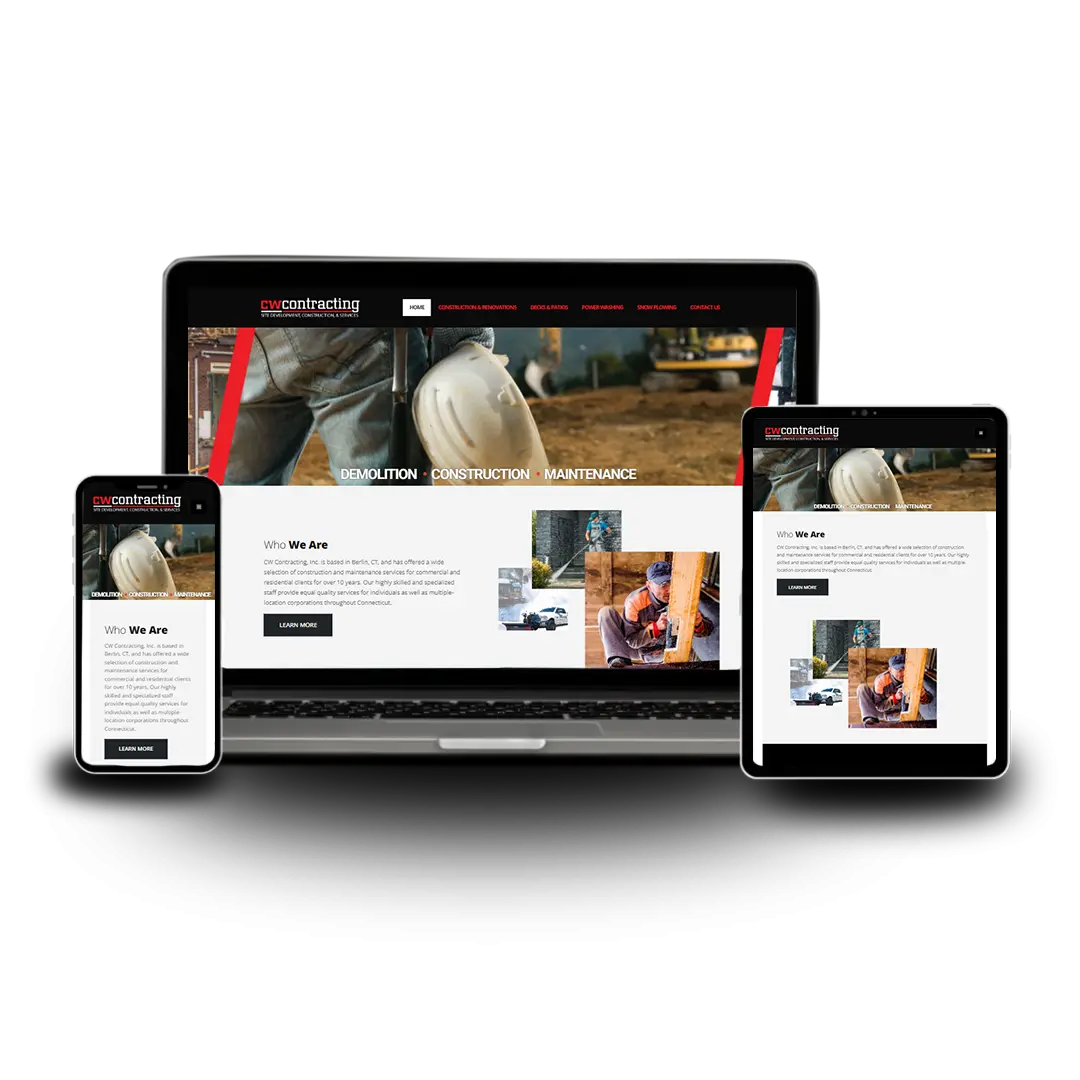
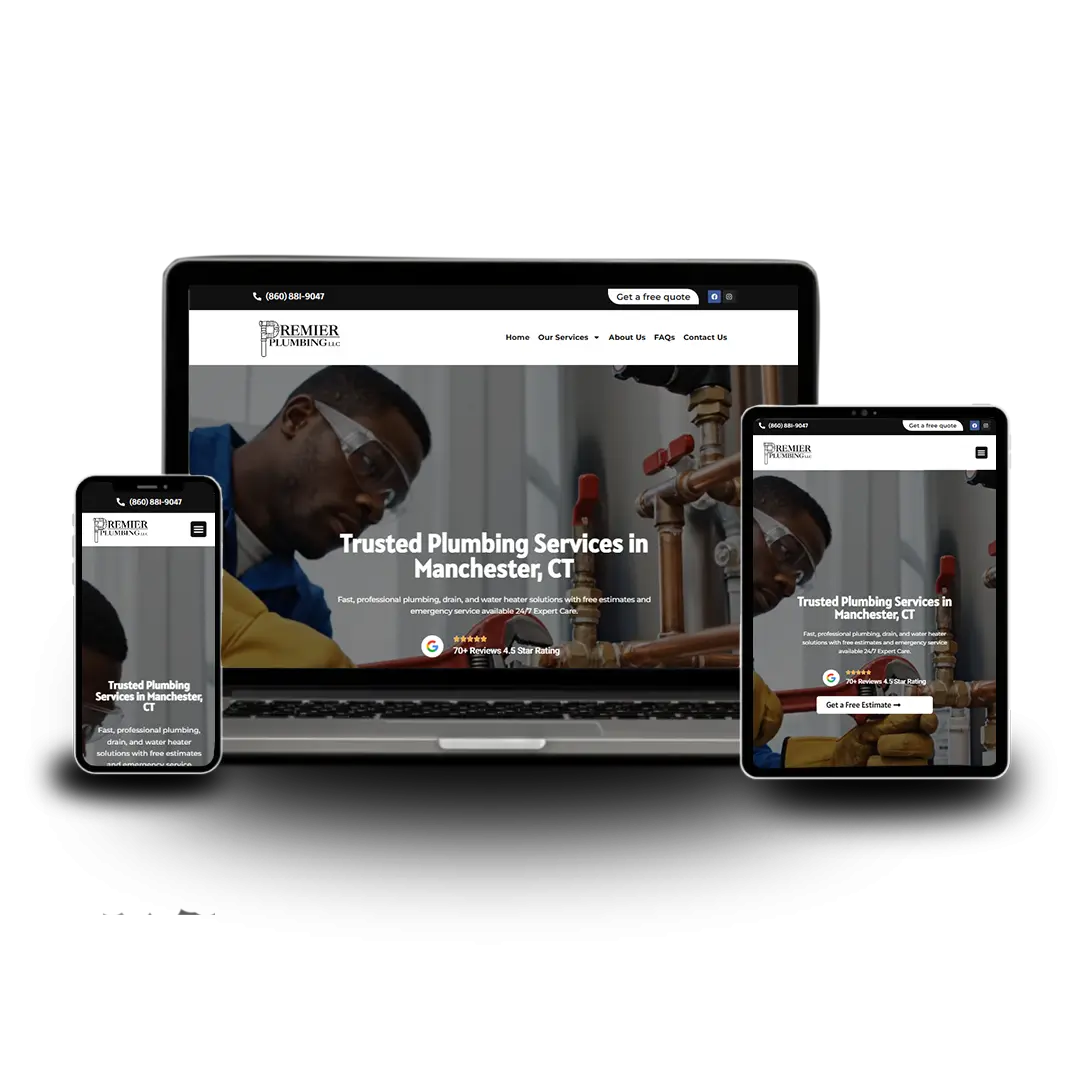
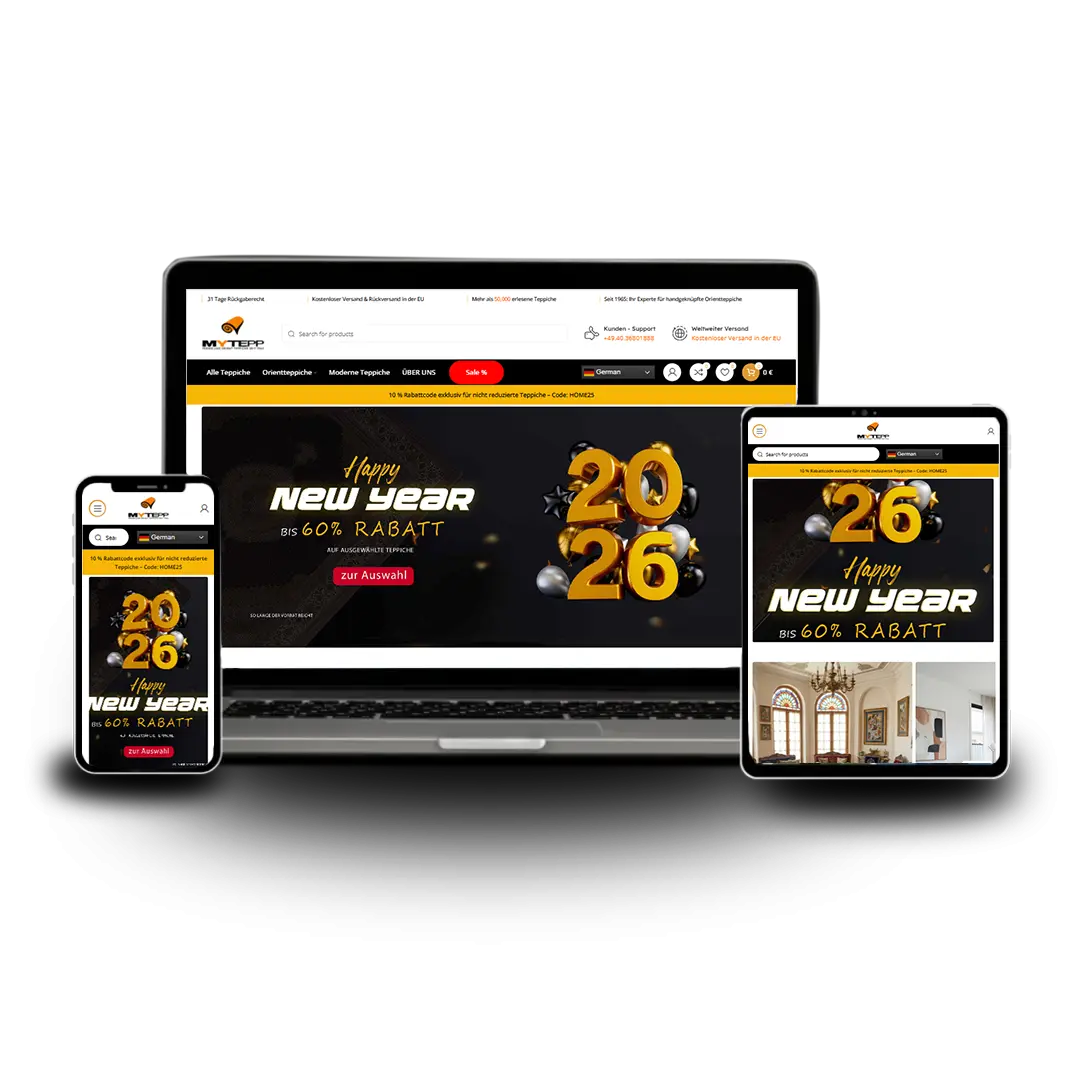
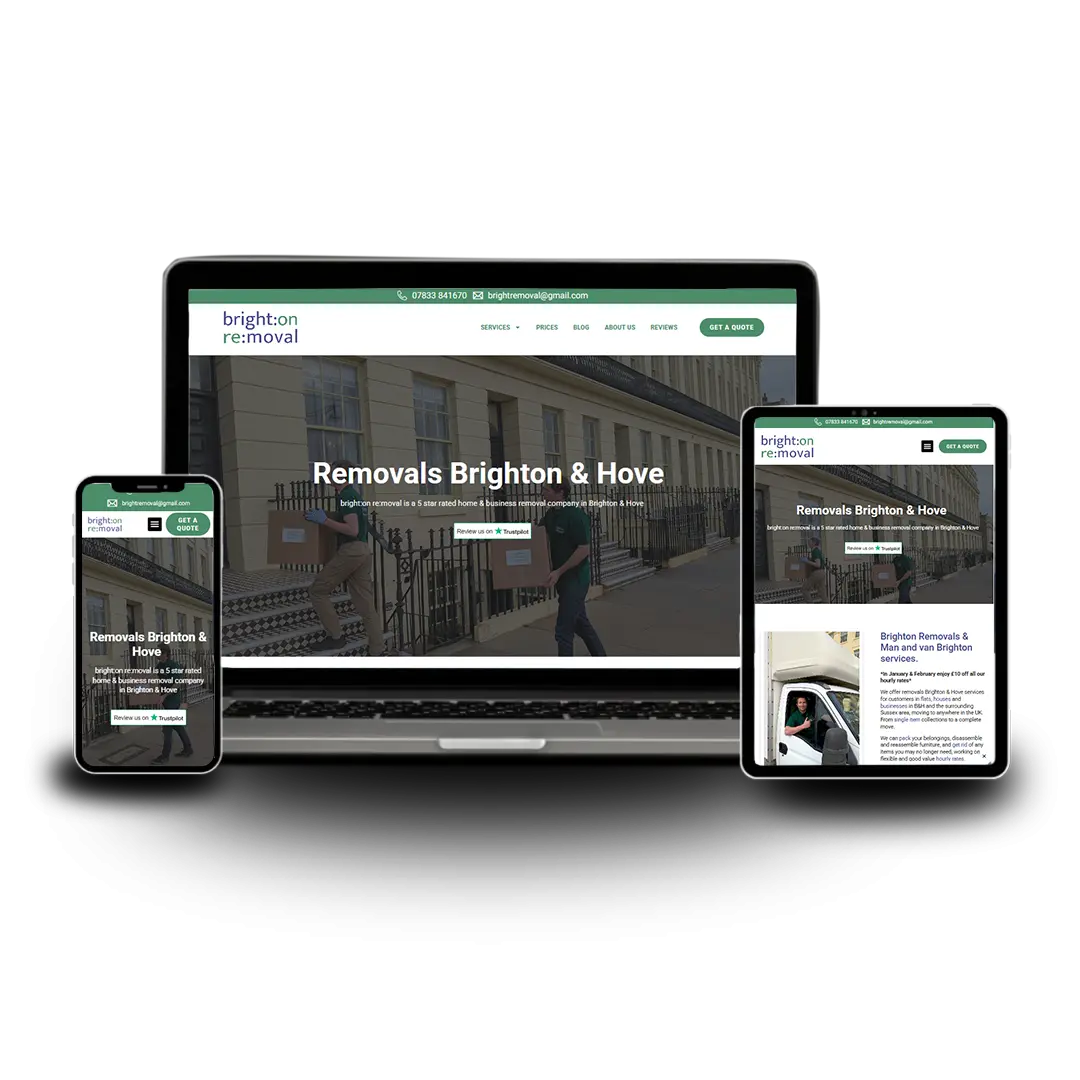
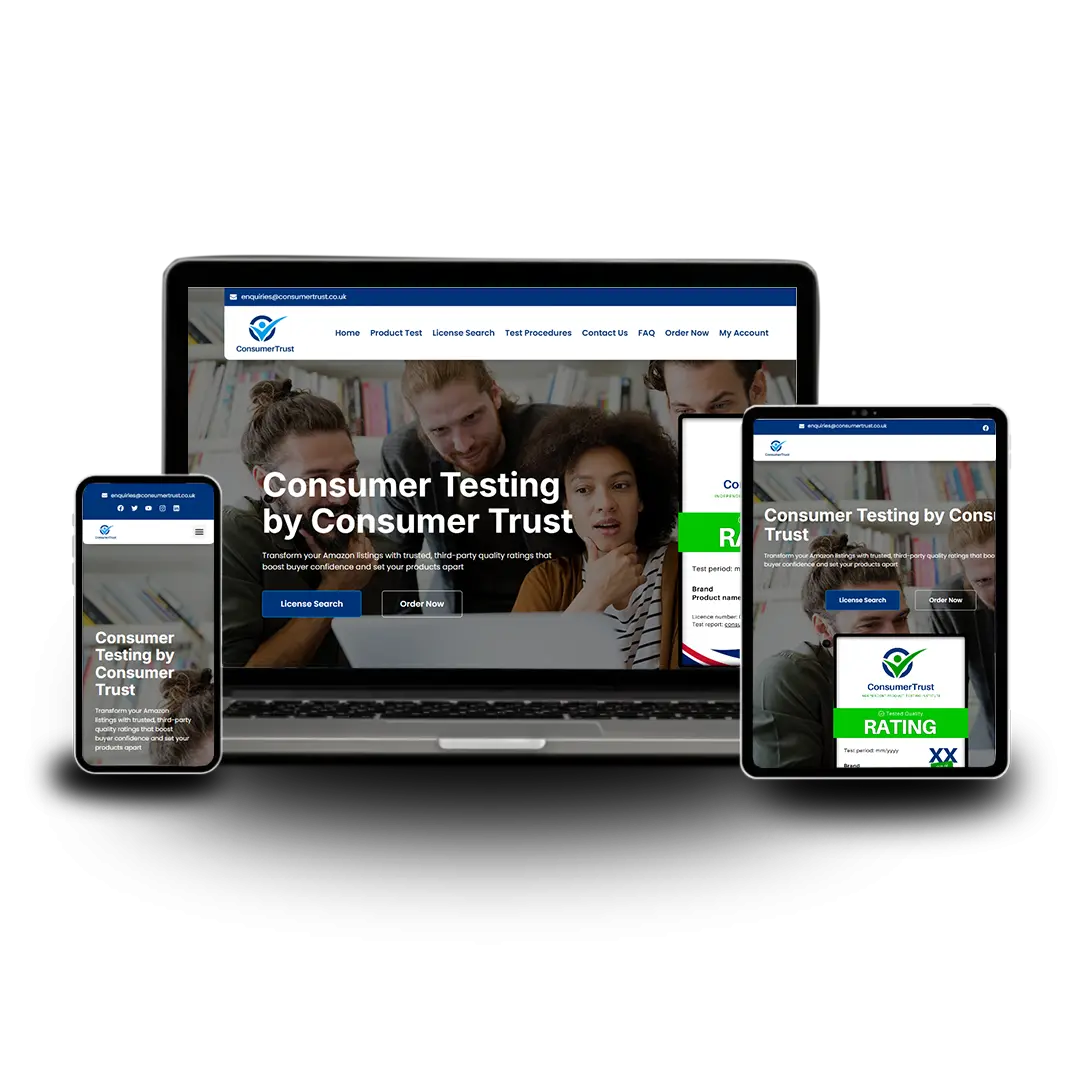
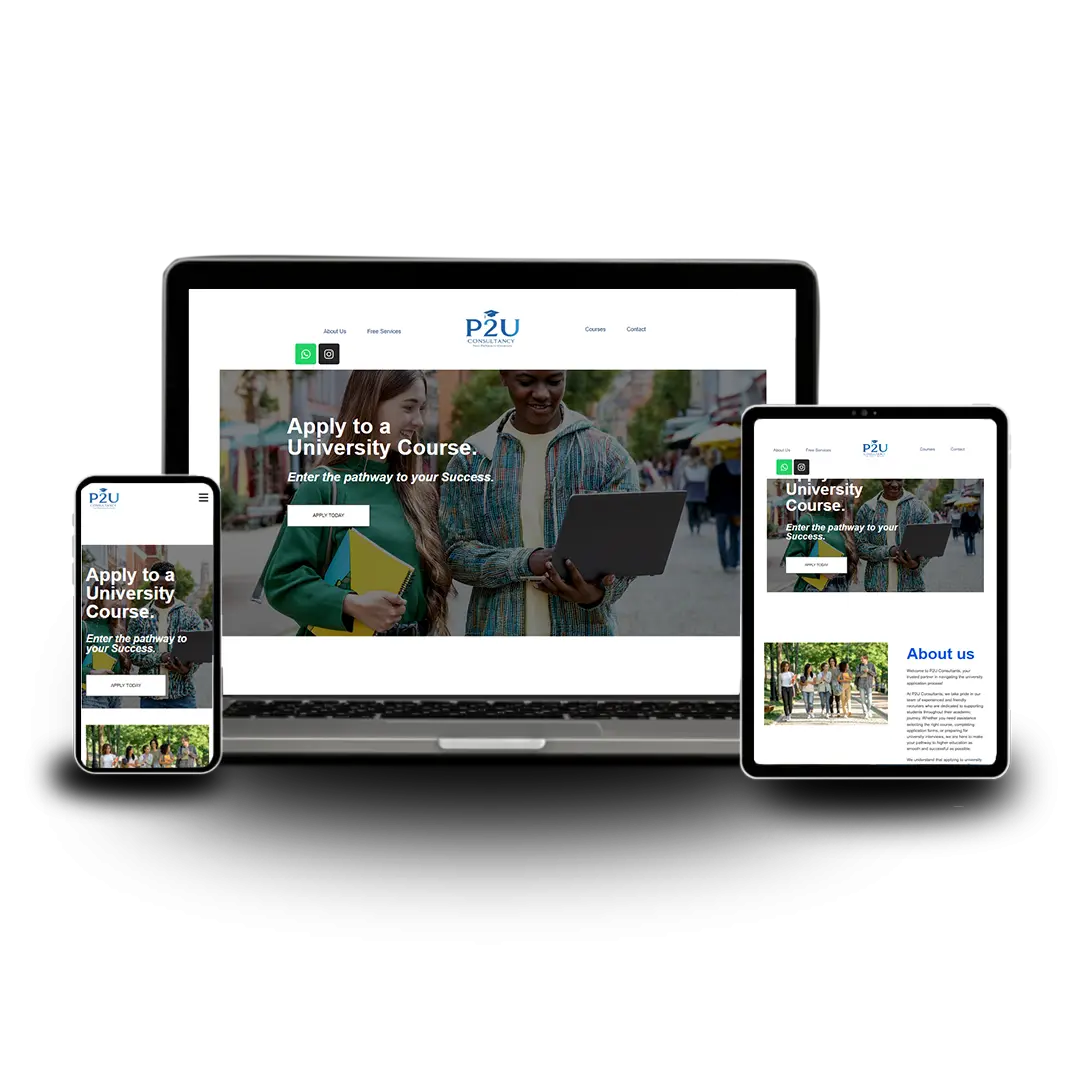
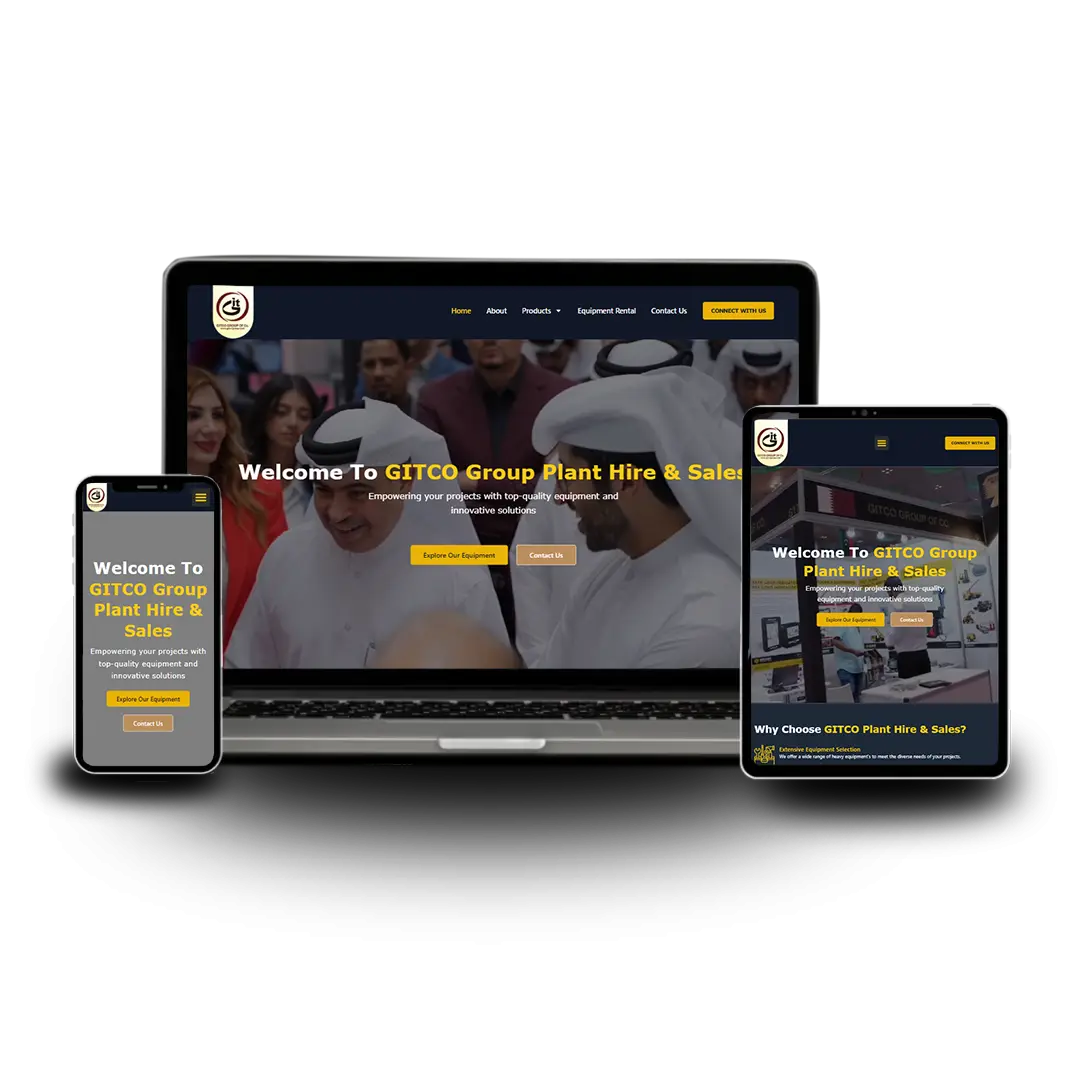
Some of the websites we’ve built for clients, in Connecticut and beyond. There’s more on our recent projects page.
Website SEO usually comes in two parts: a fixed price for the one-time technical cleanup, then a monthly fee for ongoing page work. For context, local SEO plans for small service businesses commonly run about $500 to $2,000 a month. We give you a fixed quote after the free audit, so you know the number before anything starts.
Website SEO works on your site: pages, titles, speed, indexing and structured data. Local SEO works on your Google Business Profile, reviews and listings, which decide the map. They feed each other. The map leans on your website to understand what you do, and a strong website ranks better when the profile backs it up.
No, only for the towns you really want work from and can say something true about. Google’s spam policies warn against city pages that exist only to funnel visitors to one page. If you’re based in Newington, pages for Wethersfield, Rocky Hill and West Hartford usually make more sense than one for Stamford.
AI can help with a first draft, but it can’t know your jobs, your photos or your prices. Google’s spam policies target many pages generated mainly to manipulate rankings, which is what mass-produced town pages often turn into. We write each page with real details from your business, then check it reads like you.
Google’s targets are clear: main content within 2.5 seconds, a response to taps in under 200 milliseconds and a layout that doesn’t shift around. Pressure washing sites commonly miss them because of large before-and-after photos, sliders and extra plugins. Compressing images and trimming the page usually closes most of the gap.
Not directly. Schema helps Google and AI tools understand your business, services and service area, which supports everything else. Google stopped showing FAQ rich results in May 2026, so FAQ markup won’t add dropdowns to your listing. LocalBusiness and Service markup that matches your profile is still worth having.
It can, if old URLs disappear without redirects or pages that ranked get cut. Before any redesign goes live, we map every old URL to its new home with 301 redirects, keep the content that earns traffic and watch Search Console closely for the weeks after launch. Done carefully, a redesign doesn’t have to cost you rankings.
Yes, most website builders can rank when the pages are set up well. The limits usually show up in speed and in how much control you have over code and schema. If your builder is holding you back, we’ll tell you plainly. If it isn’t, we won’t push a rebuild you don’t need.
Most sites see early movement within four to eight weeks, with stronger rankings building over three to six months. Technical fixes can register as soon as Google recrawls the pages. New service and town pages take longer, and towns with more competitors, like parts of Fairfield County, usually take the longest.
If your website looks good but the phone stays quiet, the reasons are usually on the page or under the hood, and they can be found. We’ll send a short video showing what Google sees, what’s holding the site back and what to fix first.
Website SEO for pressure washing isn’t about tricks. It’s clear pages, a clean setup and a fast site, built by a small team right here in Hartford. Send us your web address and the towns that matter most, and we’ll handle the rest.