
The season is coming, a marketer is quoting you monthly retainers, and a Facebook group is swearing yard signs are all you need. Meanwhile nobody will give you a straight number. Setting a pressure washing marketing budget should not require a finance degree, and this guide exists so it does not.
You will get the benchmark ranges from the 2026 studies with every source named, the math to derive your own number from your average ticket, what each budget level actually buys, and the real figures we work with at our own agency. Including our own prices, in print, because a budgeting article that hides what its author charges is only half honest.
The Short Answer: What the 2026 Benchmarks Say
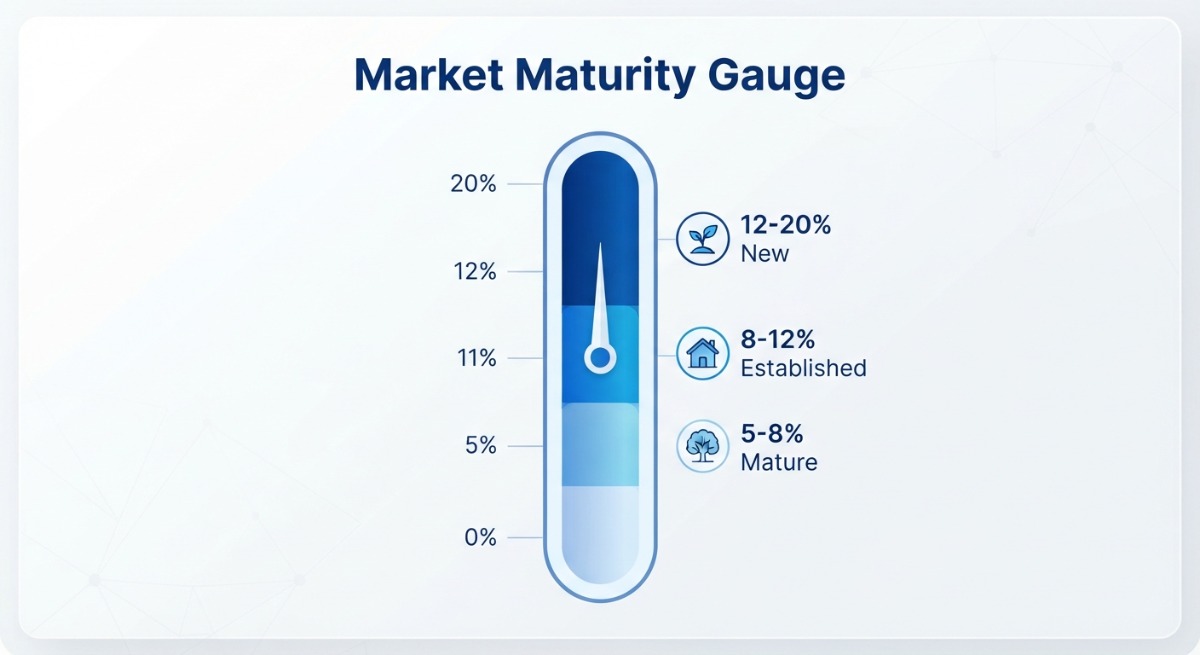
Most established pressure washing companies should budget 8 to 12 percent of gross revenue for marketing, new or aggressively growing companies 12 to 20 percent, and mature market leaders 5 to 8 percent. The SBA’s long-standing guidance sits around 7 to 8 percent. For a $200,000 company, that means roughly $1,300 to $2,000 per month in season.
Here is how the major published benchmarks line up:
| Source | Stage | Recommended percent of revenue |
| SBA guidance (via Watson & Co) | General small business | About 7 to 8% |
| Watson & Co, 2026 | Maintenance mode | 8 to 10% |
| Watson & Co, 2026 | Growth mode | 12 to 15% |
| PipelineOn, 2026 | New company (under 2 years) | 15 to 20% |
| HSM Pro, 2026 | Under $1M revenue | 5 to 10% |
| King of Pressure Wash | Building phase | 10 to 15% |
| King of Pressure Wash | First $100K target | About 10% of target revenue |
Different datasets, same convergence: healthy companies spend high single digits to low teens, and new companies spend more, not less. The rest of this article turns those percentages into your number.
Why the Percent-of-Revenue Rule Exists (and Where It Breaks)
The Underspending Trap
The rule exists because underspending has a measurable cost. The finding reported alongside the SBA guidance, cited by Watson & Co in 2026: companies allocating under 5 percent of revenue to marketing report declining revenue 71 percent of the time.
Plain English: silence costs more than ads. A truck that nobody hears about washes fewer houses every year, whatever the owner saves on marketing.
Why New Companies Must Spend a Higher Percent
A new company has no review base, no brand searches, no repeat customers and no referral flywheel. Every early job must be bought, one way or another. That is why every benchmark set puts new businesses at the top of the range, 12 to 20 percent, and why treating that as temporary tuition rather than permanent overhead is the right mental model.
Where the Rule Breaks for Pressure Washing
Here is the part every national benchmark article misses, and it matters most in a state like ours.
Pressure washing in a northern market is an 8-month business. A Connecticut company targeting 12 percent of annual revenue is really spending 16 to 18 percent of in-season revenue during April through November, with spend tapering hard in winter. That concentration is correct budgeting, not overspending. An 8-month season changes the math, and a flat monthly budget copied from a national article quietly starves your spring.
If you take one thing from this article as a seasonal operator, take that.
Build Your Budget From Job Math, Not Vibes (The Owner’s Formula)
Percent rules are sanity checks. Your actual budget should come from your own economics, in four steps. The numbers below are an illustration; redo them with yours.
Step 1: Revenue Goal Divided by Average Ticket Equals Jobs Needed
| The math | Illustration |
| Revenue goal | $200,000 |
| Average ticket | $450 |
| Jobs needed | About 445 |
House washing and commercial tickets often run $400 to $600 and up, so substitute your real average from last season.
Step 2: Jobs Needed Divided by Close Rate Equals Leads Needed
At a 50 percent close rate, 445 jobs needs about 890 leads across the season. If you do not know your close rate, that is the first number to start tracking, because every dollar downstream depends on it.
Step 3: Leads Times Allowable Cost Per Lead Equals Budget
Now the honest reconciliation of lead costs, because published figures range wildly and each measures something different. Google LSA leads in the cleaning vertical have published ranges around $15 to $45 (Blue Grid Media, 2026), and we covered that channel fully in our guide to Google LSA for pressure washing. Broader home services cost per lead runs $76 to $100 for high-volume trades and $100 to $264 for standard trades per WebFX’s 2026 benchmarks, with LocaliQ’s 2025 data pegging HVAC around $128 and roofing around $228.
Pressure washing typically sits at the affordable end of that spectrum, but your blended cost per lead across channels lands higher than the LSA floor. For seasonal planning, a blended $30 to $60 assumption is defensible; at $40 blended, 890 leads is roughly $35,000 across the season, or about $4,400 per month over 8 months. The deeper math on this lives in our cost per lead for pressure washing breakdown.
Before you panic at that figure: a healthy share of leads should not cost per-lead money at all, because repeat customers, referrals and organic map pack visibility are free at the margin. The paid budget covers the gap between what the free sources produce and what the goal requires, which for most established companies lands right back in the 8 to 12 percent band.
Step 4: Sanity-Check Against the Percent Benchmarks
Run your result against the table above. If the formula says 4 percent, you are probably underestimating what leads cost, or you have an unusually strong referral base; enjoy it while auditing it. If it says 25 percent, your close rate or your ticket needs work before your budget does, because no budget outruns a leaky sales process.
Want us to run this math for your numbers? That is the first page of our free growth audit.
What Different Monthly Budgets Actually Buy in 2026
A budget is a stack of deliverables, not magic. Here is what the market, including us, actually sells at each level. We quote these bands weekly, and the most common mistake we see is a $300 budget split across five channels.
Under $200 a Month: Foundation Only
This level buys foundation work: Google Business Profile optimization, a review system, basic tracking. As a real reference point, our own 360 degree growth system for pressure washing companies starts from $90 per month at the entry level.
The honest framing: this maintains and compounds, it does not flood the phone. At this level your job is to pair the small spend with the free work: complete profile, relentless review asks, photos from every job.
$400 to $900 a Month: The Owner-Operator Growth Band
This is where most $100K to $400K companies belong: local SEO plus content plus review flow plus light ads management. Our own Business Growth Packages run $450, $600 and $850 per month depending on scope, printed here so you can calibrate any quote you receive, including ours.
One consumer-protection note that matters at every agency, not just ours: ad spend itself is additional to the management fee, industry-wide. A quote that blurs the line between what the agency keeps and what goes to Google or Meta is a red flag, and you should ask any provider, including us, to split those numbers in writing.
$1,500 to $3,000+ a Month: Multi-Crew Scaling
This band matches Watson & Co’s $3,300 to $6,250 monthly for $500K companies and the entry of HSM Pro’s $4,000 to $12,000 band: full channel mix, meaningful ad budgets, proper tracking, content production. If you are here, your questions are about allocation and attribution, not whether to spend.
Where the Money Goes: A Sane Channel Split
Adapting HSM Pro’s published allocation to a small pressure washing company: roughly 30 to 45 percent to paid leads (LSA and search ads), 20 to 30 percent to SEO and content, 10 to 20 percent to Meta ads and remarketing, 10 to 15 percent to reputation and reviews, and 5 to 10 percent to CRM and automation.
One override for small budgets: under about $500 total, splitting is wrong. Concentrate, do not sprinkle. Complete the profile, build the reviews, run one paid channel well, and add channels only when the first one is measured and working.
How We Actually Allocate Budget for Our Own Client
Benchmarks are other people’s averages. Here is a real allocation, from the client where we decide the budget split ourselves and live with the results.
The Mr-Suds Split: Foundation First, Then Paid
With Mr-Suds Power Washing PROs in Newington CT, the early budget went into assets that do not expire: a full Google Business Profile build, 18 service pages, 15 SEO articles, and a review system that reached a 5.0 rating across 39 reviews.
That foundation now holds top 3 map pack positions for 8 of 10 service keywords in Newington, which means a growing share of leads arrives from organic visibility at no per-lead cost. That is what “assets first, attention second” buys: the assets keep paying after the invoice stops. The identity work underneath it is what we described in entity SEO for contractors, and the full program is on our digital marketing for pressure washing companies in Connecticut page.
Why Paid Came Second, Not First
Paid leads convert better when they land on a proven profile and a real site, so every ad dollar works harder after the foundation exists. Ads now generate leads that land in the CRM, 474 contacts and counting, where automated follow-up protects the spend, because a paid lead that sits in voicemail is budget burned twice. That follow-up failure point is the exact problem our AI receptionist work exists for.
The Seasonality Play We Run in Connecticut
Spend concentrates ahead of and during the April to November season: heavier in the spring ramp when homeowners start looking, sustained through summer, tapering in late fall. Winter drops to foundation maintenance and next-season content, because January ad dollars in a frozen market buy expensive silence.
Budget by season curve, not by flat months. Twelve equal payments is how software subscriptions work, not how a northern washing season works.
What We Tell Owners Who Have $200 and a Dream
Respectfully, and from experience: you can start. Claim and complete your Google Business Profile, which is free. Build a review habit on every single job, which is free. Put yard signs and door hangers on every street you work; King of Pressure Wash’s field playbook of roughly $3 to $5 per placed sign remains sound. Then add your first paid channel once your phone process actually answers and follows up.
What a small budget cannot do is flood the phone this week. What it can do is compound, and compounding is how every bigger company here started.
How to Tell If Your Budget Is Working (90-Day Scorecard)
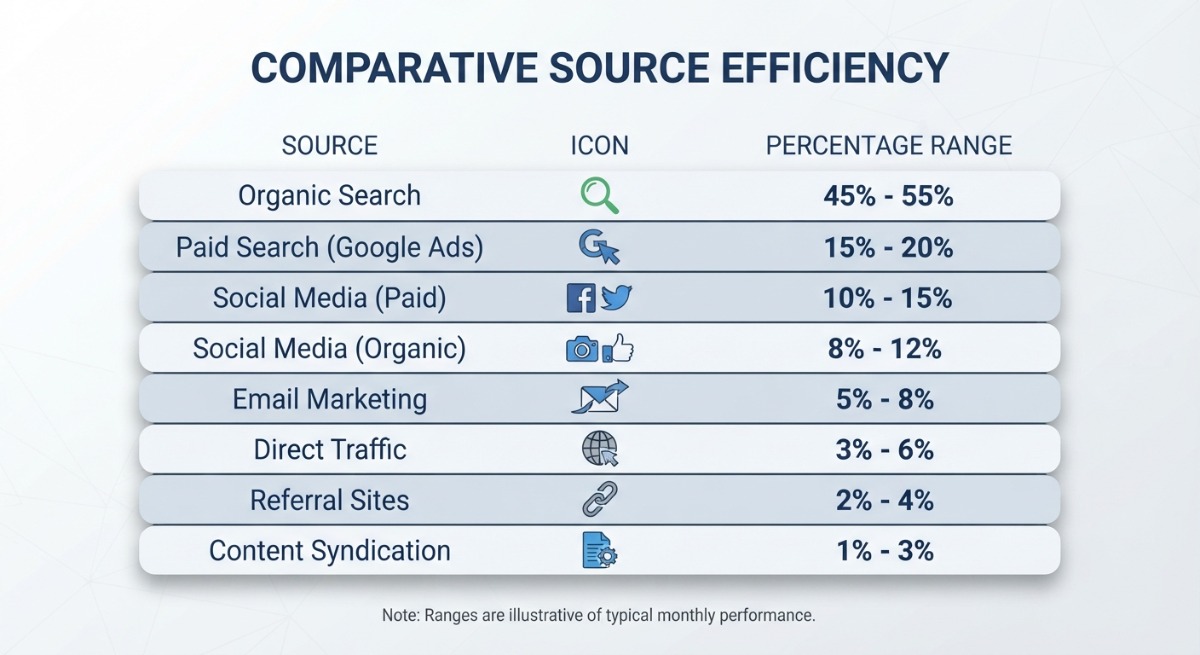
Track six numbers, defined in owner terms. Cost per lead: total channel spend divided by leads it produced. Cost per booked job: cost per lead divided by booking rate, the number that actually matters. Booking rate: leads that became scheduled jobs. Revenue per channel: what each source produced, which your CRM tags tell you. Review velocity: new reviews per month. Map pack positions: where you stand in your towns for your services.
The Sunday-night version: you open the CRM, and every booked job shows which channel it came from. That visibility is the real product a budget buys, because it turns next month’s allocation from a guess into a decision.
Timelines, honestly: evaluate paid channels at 90 days, not 30, because learning phases and season noise lie early. Evaluate SEO at 6 to 12 months, because that is how compounding works. Kill nothing at 30 days except obvious junk.
When to Raise Your Budget (and When Not To)
Raise the budget when three things are true at once: jobs are profitable at your current cost per booked job, you have crew capacity to absorb more work, and your follow-up actually answers every lead. Growth spend on top of that base multiplies.
Do not raise it when leads already leak. If quotes go unanswered, calls hit voicemail after 3pm, or your close rate is sliding, fix the process first, because more leads into a leaky bucket just raises the water bill. And keep an eye on where search itself is heading as you allocate, which we covered in how AI Overviews are changing home service search in Connecticut.
FAQ: Pressure Washing Marketing Budget
What percentage of revenue should a pressure washing company spend on marketing?
Benchmarks converge on 8 to 12 percent of gross revenue for established companies, 12 to 20 percent for new or fast-growing ones, and 5 to 8 percent for mature market leaders. The SBA’s long-standing guidance sits around 7 to 8 percent.
How much does marketing cost per month for a small pressure washing business?
A company doing $100,000 to $200,000 a year typically lands between about $700 and $2,000 per month in season when following the 8 to 12 percent benchmarks. Below that, concentrate on the free foundation plus one channel rather than spreading thin.
What does the SBA recommend for marketing budgets?
Roughly 7 to 8 percent of gross revenue for small businesses. The companion finding often cited with it: companies allocating under 5 percent report declining revenue 71 percent of the time. Underspending has a measurable cost.
How much does a pressure washing lead cost?
Google LSA leads in the cleaning vertical have published 2026 ranges around $15 to $45. Blended across channels, home service leads run higher: $76 to $100 for high-volume trades per WebFX, with standard trades at $100 to $264. Your close rate decides what a lead is worth to you.
What is a realistic budget for a brand-new pressure washing business?
Plan 10 to 20 percent of your target revenue. King of Pressure Wash’s blueprint pegs about 10 percent of a $100,000 goal, roughly $1,250 per month across an 8-month season, weighted toward the channels that build reviews and local visibility fastest.
Should I spend on SEO or ads first?
Both matter, but sequence them: complete the free foundation (GBP, reviews), then one paid channel for immediate leads, while SEO and content compound underneath. Ads without a strong profile pay for weak conversion; SEO without patience gets abandoned before it pays.
Can I market a pressure washing business for under $500 a month?
Yes, honestly and slowly. A complete GBP, a relentless review habit, yard signs on every job street and a systemized follow-up cost little. Entry-level managed systems exist from around $90 per month. What a small budget cannot do is flood the phone this week.
When should I increase my marketing budget?
When three things are true at once: jobs are profitable at your current cost per job, you have crew capacity to absorb more work, and your follow-up answers every lead. If leads already leak, fix close rate and follow-up before buying more leads.
Turn Your Revenue Number Into a Written Plan
Bring your revenue goal and your average ticket. We will hand back the job math, a budget range for your market, and a channel plan, in writing, no obligation. And since our own packages start from $90 per month, the plan will include options at every level, including the parts you can do yourself for free. That transparency is the point of this article, so it should be the point of the audit too.
Get Your Free Growth Audit
MR Web Solutions, Hartford CT. Call us at +1 860 255 1070.