
Most “best pressure washing websites” lists judge how a site looks. But your site has exactly one job: turning a visitor into a call or a booked estimate, usually on a phone, usually in under a minute. So this roundup of pressure washing website examples judges something different: the plumbing, not the paint.
Every site below is scored against the same 10-point conversion framework. You will see what the big operators get right, where even good sites leak leads, and one site we can tear down from the inside, because we built it for a real Connecticut pressure washing company that ranks in its local map pack. We build these sites for a living, and the criteria come from that work, not from a design gallery.
What Makes a Pressure Washing Website Convert?
A pressure washing website converts when a visitor can see what you do, where you work and why to trust you within seconds, and can call or request a quote in one tap. The core elements: a clear hero with offer and phone, before and after proof, reviews, service pages, service area signals and a fast mobile experience.
Here is the full framework as a checklist:
- Hero clarity
- Phone number placement
- One primary CTA
- Before and after proof
- Live reviews on the page
- One page per service
- Service area signals
- Speed
- Mobile experience
- Capture beyond the call
The 10-Point Teardown Framework We Score Every Site Against
1. Hero Clarity
The test: without scrolling, can a visitor see the service, the area and an offer? “Charleston pressure washing, free estimate” passes. “Welcome to our website” fails.
2. Phone Number Placement
Top right, clickable on mobile, and repeated at every decision point down the page. If a visitor has to hunt for the number, some of them hunt on a competitor’s site instead.
3. One Primary CTA
One dominant action, call or quote, repeated consistently. Five competing buttons split attention five ways, and split attention books nothing.
4. Before and After Proof
Real jobs, not stock photos, ideally captioned with town names. This trade sells transformations, and the transformation is the most persuasive pixel on the page.
5. Reviews on the Page
A live Google rating with count and recency beats pasted quote blocks, because visitors trust numbers they can verify over praise the owner selected.
6. One Page Per Service
Every service needs its own page, so search rankings, ads and AI answers all have somewhere specific to land. One “Services” page for eight services ranks for none of them.
7. Service Area Signals
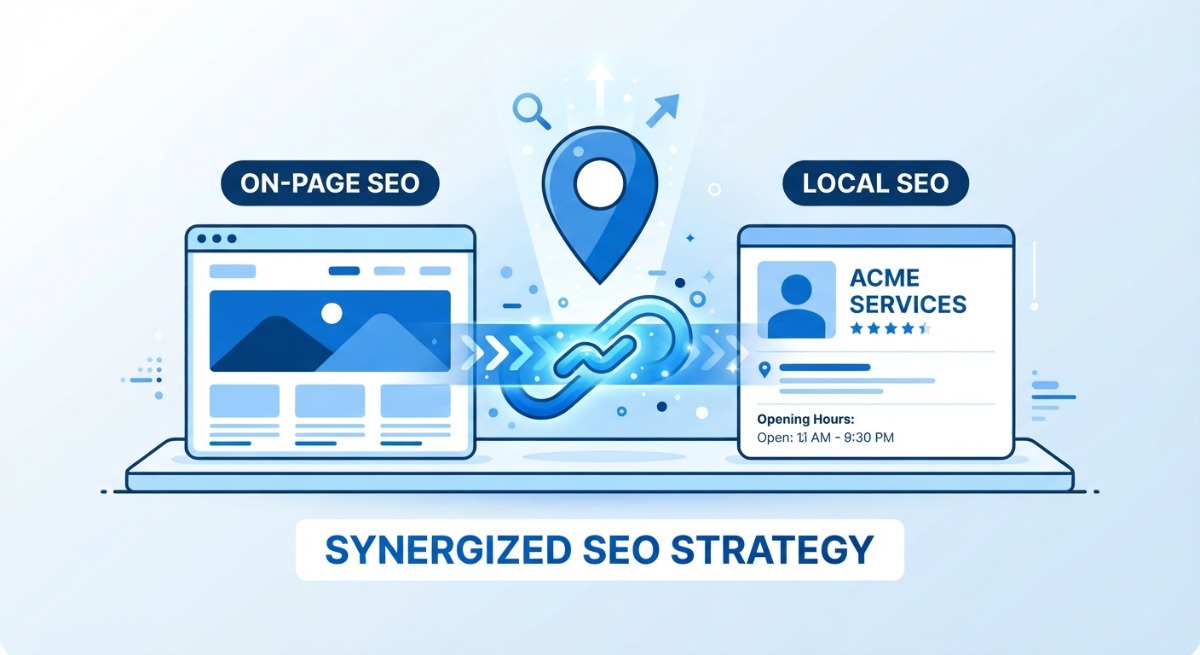
Towns named in the copy, location pages for key markets, an embedded map. This tells visitors you are local and tells Google where to show you, which is half of the ranking system we covered in our pressure washing SEO guide.
8. Speed
Test any site free in PageSpeed Insights. Heavy photo galleries are the usual killer, and a large share of mobile visitors abandon pages that take much over 3 seconds to load. Beautiful and slow loses to plain and instant.
9. Mobile Experience
Most local service traffic is mobile. The call button belongs one thumb-tap away, and quote forms should ask 3 to 5 fields, because every extra field costs completions.
10. Capture Beyond the Call
A short quote form, a booking option, or at minimum a fast-response promise, so the 9pm visitor who will not call still becomes a lead instead of a bounce.
Real Pressure Washing Website Examples, Torn Down
One honest note before the scores: we have no inside conversion data for these companies. These teardowns reflect the live public sites as of publication, scored against the framework above. That is the same limitation every roundup has; the difference is we say it, and we end with one site where the limitation does not apply.
Why these five: they are the sites that recur across the current ranking lists, they span the full range from national operator to franchise to owner-operator, and every one was live and checkable the day we wrote this. Sites change, so if something below no longer matches what you see, the framework still applies; run the score yourself.
Perfect Power Wash: What a Big Budget Buys
The national-scale operator. The hero pairs a positioning claim with a working offer, “Schedule Now To Save 10%,” and the header carries a clickable call line for a free quote. Proof stacks deep: a 5-star Google review section, BBB accreditation, stat counters like 20+ years and 300,000+ customers, and a split-screen dirty-versus-clean siding visual.
What it gets right: offer-driven CTAs, layered trust badges, real before and after visuals, and a full service page architecture split residential and commercial. The service area handling is also worth noticing: nine states organized under seven regional offices with an embedded map, which is multi-market structure done properly rather than a wall of town names.
Where it leaks: multiple phone numbers and several competing conversion paths, plus a quote form long enough to lose impatient mobile visitors, asking for address, name, phone, email, service selections and a promo code before the visitor has spoken to anyone. Copy this: the offer in the CTA and the proof stacking. Skip this: the big-brand sprawl; a local company copying seven pathways just confuses its one visitor.
Pepper’s Pressure Washing: The Owner-Operator Benchmark
The Charleston SC site is the best small-company example we found live. The hero names the service, the city, “5.0 from 600+ reviews” and 12+ years, with a free estimate promise. The phone number sits in the header and the hero form, the quote form uses service checkboxes with a maps-powered location field, and three projects run drag-to-compare before and after galleries. Eleven service pages, dozens of area names, and “$2M General Liability” stated in plain text.
What it gets right: nearly everything on the framework, including the insurance line that quietly answers a commercial buyer’s first question. Where it leaks: some stat counters rendered as placeholders at the time we checked, a small polish miss. Copy this: the rating-in-the-hero and the drag-to-compare galleries. Skip this: honestly, very little; this is the template to study.
Revive Power Washing: Proof and Pricing Transparency
The Pennsylvania operator leads with “PA’s Highest Rated Exterior Cleaning Company, Over 2,000+ 5 Star Reviews Online” and a 4-field quote form promising it “Takes Only 7 Seconds.” Six drag-to-compare before and after pairs, a clickable phone in the navigation, seven service cards, five named PA towns with location pages, and, rarest of all, three transparent package tiers with real dollar figures and per-square-foot ranges.
What it gets right: the short form, the review-count-as-headline, and the published pricing that pre-qualifies callers. Where it leaks: “Get A Fast Quote” appears more than six times alongside secondary buttons, diluting a page that has already earned the click. Copy this: the 4-field form and the visible pricing tiers. Skip this: repeating the CTA past the point of usefulness.
Big Green Men: Branding Without the Review Layer
The Miami company’s hero states “Miami’s Premier Pressure Washing & Industrial Cleaning” with an eco-friendly angle, and the phone number appears in four places. Ten South Florida towns get individual landing pages, and services are organized in a clean three-category structure.
What it gets right: memorable branding, disciplined phone placement, and a genuinely good location page architecture. Where it leaks: no star rating or review count on the homepage (the proof hides behind footer links to Google and Yelp), gallery images show afters without befores, and the estimate request routes to an external third-party form, which adds friction and looks less trustworthy than a native one. Copy this: the town-page structure. Skip this: burying your best proof one click away from the visitor deciding right now.
Sparkle Wash: The Franchise Template Ceiling
The national franchise site shows what happens when a template serves the franchisor more than the customer. At the time we checked, homepage stat counters rendered incomplete, the strongest visible content was franchise-focused (own-a-franchise links, a franchise-of-the-year award), testimonials appeared without star ratings, no before and after gallery was visible, and the quote form ran long and multi-step across eight service categories.
What it gets right: an 800 number in the header and a deep service taxonomy. Where it leaks: the homepage sells the franchise as much as the wash, and a long form asks commitment before the site has earned it. Copy this: the service breadth as a sitemap idea. Skip this: everything that talks to investors instead of homeowners; your visitor has a dirty driveway, not a franchise inquiry.
The Inside Teardown: mr-suds.com, the One Site We Can Explain Fully
Full disclosure first, because it is the point of this section: MR Web Solutions built mr-suds.com for Mr-Suds Power Washing PROs of Newington and Hartford CT, and the companies share an owner. When we built it, we had no client to impress, only a phone that needed to ring. That is exactly why we can show the reasoning behind every element, which no outside-in teardown can.
Scored Against the Same 10 Points
Run honestly, the site scores strong but not perfect, and pretending otherwise would read fake. The strengths: a hero built around a fast-quote promise, one dominant quote CTA, 18 service pages so every service and both core towns have a landing page, before and after photos from real Connecticut jobs, and town names written through the copy for the 18-town service area.
The candid improvement list, because every live site has one: we want the live 5.0 Google rating and its review count surfaced as an on-page widget rather than quoted testimonials alone, and we are expanding the drag-to-compare before and after pairs, because Pepper’s and Revive show how well that format sells. A site is a working asset, not a finished painting, and ours gets the same quarterly audit we give clients.
The Decisions Behind It
Every choice traces to a conversion or ranking job. The hero promises a fast quote because speed is the deciding factor for storm-season callers. Each of the 18 service pages exists so that a search, an ad or an AI answer for that service in that town has an exact landing page. The town names are not decoration; they are the service area signals that feed the map pack.
What the Structure Produced
Top 3 in the Newington map pack for 8 of 10 tracked service keywords, supporting a 5.0 Google rating across 39 reviews. Which proves the quiet thesis of this whole article: conversion structure and ranking structure are the same structure. The page built to convince a homeowner is the page built to convince Google.
Steal these four things this week: one dominant CTA, a page per service, live reviews on the page, and town names in your captions. The build approach behind it is what we run as website design in Hartford for home service companies.
The 7 Conversion Killers We See on Pressure Washing Sites Every Week
These come from audits, and at least three appear on almost every site we review.
The phone number hidden on a contact page, one click away from the visitor holding a phone. Stock photos of someone else’s house, which homeowners smell instantly. One “Services” page for eight services, which ranks for nothing and convinces nobody. Quote forms with 10+ fields, asking for commitment before earning it. No town names anywhere, so neither visitors nor Google knows where you work. A 9 MB hero video that loads in 8 seconds on a phone, which is 5 seconds after the visitor left. And “Welcome to our website” headlines, which spend the most valuable pixels on the page saying nothing.
Every one is fixable in a weekend. Most sites never fix any of them.
Template, Builder or Custom: What Should You Actually Use?
What Templates and Builders Do Well, and the Ceiling
Builders and templates get you live fast, look decent, and cost little, and for a first-season company that is genuinely fine. The ceiling arrives with SEO architecture: per-service pages, legitimate location pages, speed control and schema are where templates strain, and that ceiling is usually why a ranking site and a pretty site are different sites.
What a Pressure Washing Website Costs in 2026
Market ranges, as context: DIY builders run roughly $10 to $50 per month. Template-based professional builds commonly cost $500 to $3,000. Custom agency builds start around $3,000 and climb with scope. The honest footnote to all three numbers: structure matters more than spend. A $700 site with the 10-point framework beats a $7,000 site without it.
The Questions to Ask Any Designer Before Paying
Four questions filter most bad purchases. Will every service get its own page? Who owns the site, the domain and the content when we part ways? What happens to my existing SEO during the rebuild? And the big one: show me a client site that actually ranks, because a portfolio of pretty screenshots is not a portfolio of ringing phones.
The ownership question deserves one more sentence, because it is where owners get burned worst. Some builders and agencies keep the site hostage on their platform, so canceling the monthly fee deletes years of rankings overnight. Whatever you pay and whoever you pay it to, the domain, the content and the analytics belong in accounts you control. A designer who resists that is telling you the business model.
Grade Your Own Site: The 10-Minute Self-Audit
Do this on your phone, right now. Open your site the way a customer does. Score one point for each: your hero names the service and area, an offer is visible without scrolling, the phone number is one thumb-tap away, one CTA clearly dominates, real before and after photos appear, your live Google rating shows on the page, each service has its own page, your towns are named in the copy, the site loads in about 3 seconds (check PageSpeed Insights), and a short form catches the visitor who will not call.
Score 8 to 10: your site is doing its job, defend it. Score 5 to 7: you are leaking leads at known points, fix the framework misses first. Score under 5: your site is a brochure, not a salesperson, and it is costing you jobs every week it stays that way.
FAQ: Pressure Washing Website Examples
What should a pressure washing website include?
A hero with your service, area, offer and phone, one page per service, before and after photos from real jobs, your live Google rating on the page, town names and location pages for your service area, a fast mobile experience, and a short quote form.
How much does a pressure washing website cost?
Market ranges in 2026: DIY builders from about $10 to $50 per month, template-based professional builds commonly $500 to $3,000, and custom agency builds from $3,000 up. Structure matters more than spend at every tier.
How many pages should a pressure washing website have?
One page per service plus location pages for your key towns. A competitive local site commonly runs 10 to 20 pages; mr-suds.com runs 18 service pages across its generic, Newington and Hartford versions.
Should I show prices on my pressure washing website?
Showing “from” pricing anchors value and filters price shoppers without boxing in your quote. Sites like Revive Power Washing publish full package tiers; at minimum, per-service starting prices outperform silence.
Do I need online booking?
Usually not as a requirement. A fast quote form and click-to-call outperform mandatory booking for most companies, because jobs need measuring. Booking suits flat-rate residential services with predictable scope.
What platform is best for a pressure washing website?
WordPress offers the most SEO control: per-service pages, location pages, schema and speed tuning. Builders trade that control for convenience. The structure matters more than the platform, but the platform decides your ceiling.
Why is my pressure washing website not getting calls?
Usually one of four reasons: an unclear hero, a buried phone number, no proof on the page, or no rankings bringing visitors at all. The first three are this article; the fourth is our pressure washing SEO guide.
How important is mobile design?
Decisive. Most local service searches happen on phones, and the visitor is often standing in front of the dirty driveway. If your call button is not one thumb-tap away, the site leaks its best leads.
Want Us to Tear Down Your Site?
We will run your website through the same 10-point teardown you just read, in writing, and show you the exact leaks: hero, phone, proof, pages, speed and capture, scored the way we scored mr-suds.com above, self-criticism included. You will know precisely what to fix and in what order.
MR Web Solutions, Hartford CT. Call us at +1 860 255 1070.