
Every washing company knows the moment. The customer calls asking for “pressure washing” the house, and what the house actually needs is a soft wash. How you handle that moment, on the phone and on your website, decides whether you look like the expert or lose the job mid-explanation. The soft wash vs pressure wash question is a technical one for homeowners and a positioning one for owners, and this article answers both.
First, the clear difference between the methods, with the numbers the rest of the internet cannot agree on. Then the part nobody covers: how to structure both services on your website so each page ranks, educates and books. We run this exact structure for a Connecticut washing company whose soft washing page ranks number 1 in its local map pack, so the advice comes with a live example.
What Is the Difference Between Soft Washing and Pressure Washing?
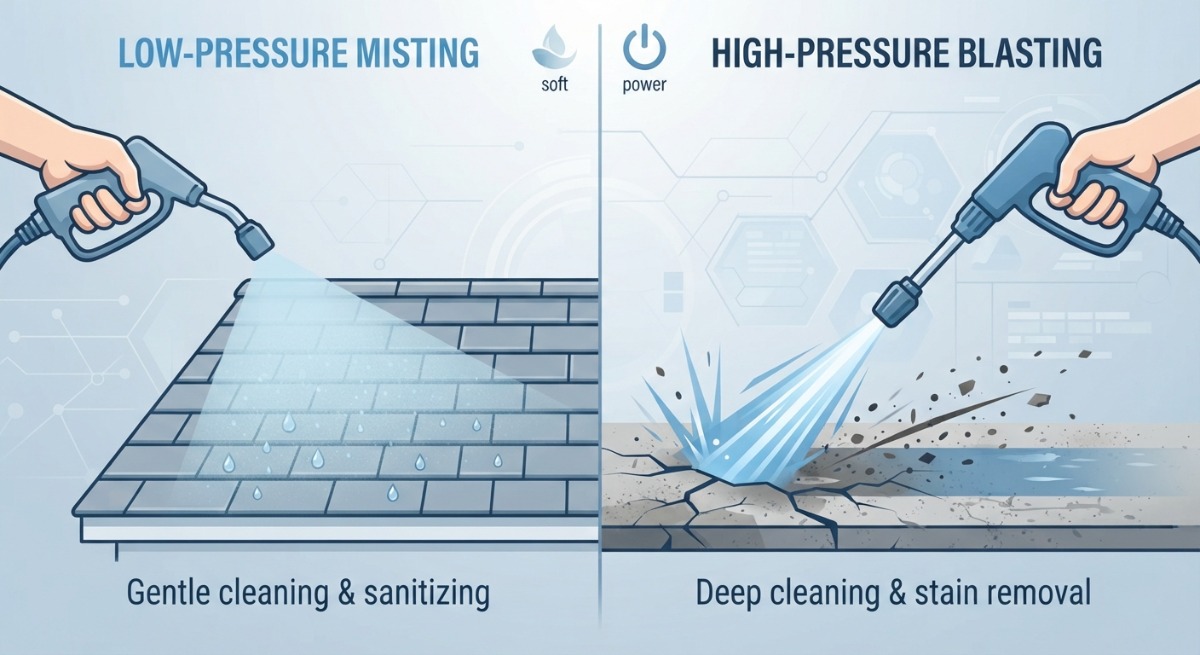
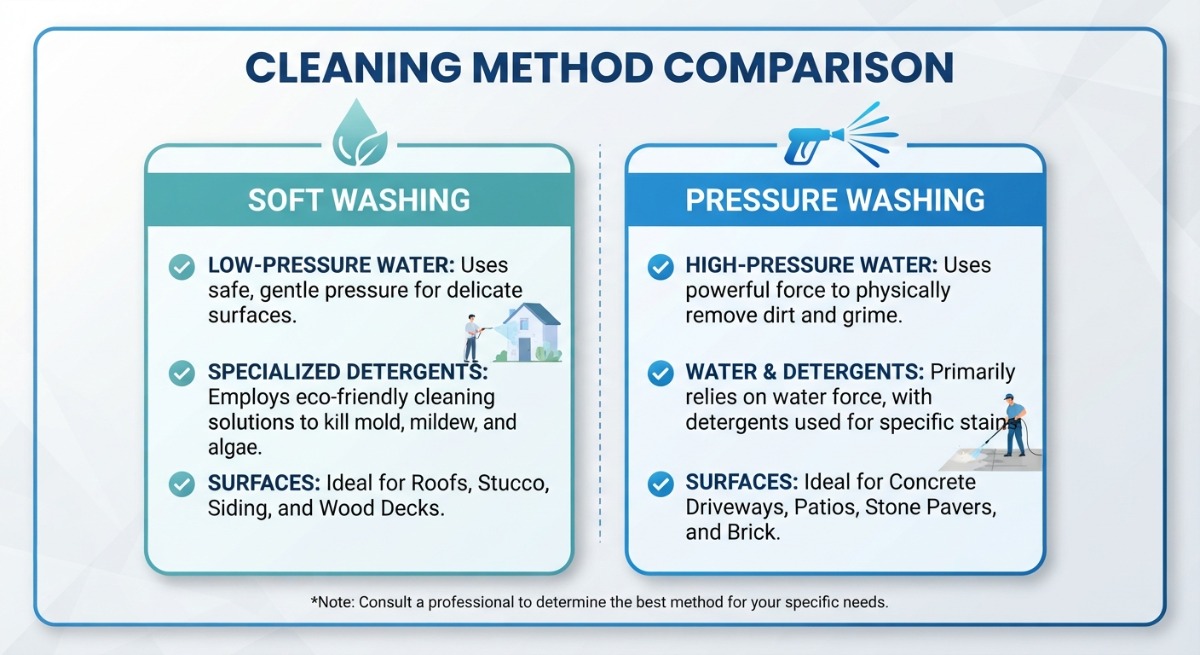
Soft washing cleans surfaces with low pressure, typically 150 to 500 PSI, using cleaning solutions such as sodium hypochlorite to kill mold, algae and organic growth on delicate surfaces like roofs and siding. Pressure washing uses high pressure, roughly 1,300 to 4,000 PSI, to blast grime off hard surfaces like concrete and brick.
Here is the full contrast in one table, consolidated from the published ranges:
| Soft washing | Pressure washing | |
| Pressure | Typically 150 to 500 PSI | Roughly 1,300 to 4,000 PSI |
| How it cleans | Chemistry: solutions kill growth, low pressure rinses | Force: high pressure physically removes grime |
| Best surfaces | Roofs, vinyl and cedar siding, stucco, painted wood | Concrete, driveways, pavers, brick, stone |
| Risk if misused | Wrong chemistry can harm plants without proper care | High pressure strips shingles, etches wood, forces water behind siding |
| Typical cost | Commonly $0.20 to $1.00 per sq ft | Commonly $0.10 to $0.75 per sq ft |
| Whole-house service | Commonly $250 to $500 for a typical home wash | Same range for typical residential jobs |
| How long it lasts | Longer on organic staining, because growth dies at the root | Instant results; organic growth can return sooner |
One honesty note about the numbers: published PSI ranges vary from source to source, and the ranges above reflect where they overlap. Costs are national market ranges to adjust for your area.
Which Surfaces Need Which Method?
Soft Wash Surfaces
Asphalt shingle roofs, vinyl and cedar siding, stucco, painted wood, and screens and enclosures. These surfaces share one trait: high pressure damages them. On a roof, pressure strips the granules that give shingles their lifespan, which is why the low-pressure method is the one roofing manufacturers point to. On siding, force drives water behind the panels where it does quiet, expensive damage.
Pressure Wash Surfaces
Concrete driveways and walkways, pavers, brick patios and stone. These are the hard surfaces that shrug off pressure and hold grime too stubborn for chemistry alone. This is where the machine earns its name and its satisfying before and after.
The Judgment-Call Surfaces
Decks, fences and older masonry sit in between, and this is where professionals separate themselves from pressure-washer renters: pros choose method by surface, not by preference or by whichever machine is on the truck. A weathered cedar fence takes gentle treatment where a newer pressure-treated one tolerates more force. An older brick chimney with soft mortar is a soft wash candidate even though brick usually takes pressure. A composite deck follows its manufacturer’s guidance, not the crew’s habit.
Knowing these calls is the actual product you sell, and it is why “which method?” is the wrong customer question. The right question, and the one your website should answer, is “which surface?”
The One-Liner for Customers
Pressure cleans the hard stuff; soft washing treats the growing stuff. If your crew can say that sentence, your website should too.
Why This Difference Is a Positioning Problem, Not Just a Technical One
Here is where this article turns to the owners, because the technical difference creates a marketing problem nobody in this space talks about.
Customers Search for What They Know
“Pressure washing” carries most of the search volume, because it is the word homeowners know. “Soft washing” carries the expertise signal and far less competition, because most homeowners have never heard of it. That asymmetry is the whole positioning game: demand lives on one term, differentiation lives on the other, and your website has to capture both.
Do not let keyword tools talk you out of the method term, either. Town-level soft washing searches often show near-zero volume in the planners, and they still bring the best jobs, because the person typing “soft washing” already knows why they want it and skips the education phase entirely. Low volume plus high intent is a trade every local business should take.
The Trap of One Combined Page
The common mistake is one “washing services” page covering both methods. That page competes for neither keyword well, forces you to explain two methods in one breath, and gives Google a muddled answer about what the page is. One page, two topics, zero rankings is the usual outcome.
The Opportunity
The companies that educate on soft washing convert the roof and siding jobs that blast-everything competitors scare away. Every homeowner who has heard a horror story about stripped shingles is a customer waiting for the company that explains method choice. Education is not a cost of selling soft washing; it is the sales pitch.
How to Structure Soft Washing and Pressure Washing on Your Website
The playbook, from a build that ranks.
Build Two Service Pages, One Per Method
Each page gets its own focus keyword: soft washing plus your town on one, pressure washing plus your town on the other. Two pages means two doors into your business, each findable by the customer who needs it, and each able to go deep on its own method instead of splitting attention.
What Goes on the Pressure Washing Page
Concrete, driveways, patios and flatwork. PSI-forward language, because this customer wants power. Instant-result framing with dramatic before and after photos of concrete transformations. This page sells force applied skillfully.
What Goes on the Soft Washing Page
Roofs and siding. The chemistry explained in plain English: solutions that kill the algae and mold at the root, rinsed at pressure gentler than a garden hose feels. Why low pressure protects shingles and vinyl. Longer-lasting results on organic staining. Before and after photos of green siding turned clean. This page sells knowledge applied carefully, and it is the page that wins the jobs your competitors are afraid to explain.
How the Pages Avoid Cannibalizing Each Other
The worry every owner has: will two washing pages compete with each other? Not if you separate them properly. Distinct keywords, distinct surfaces, distinct photos, and deliberate cross-links that say “cleaning concrete? see our pressure washing page” and “roof or siding? see soft washing.” Done this way, Google sees two topics, not two versions of one, and both pages can rank in the same town. We know because both of ours do.
Where House Washing Fits
One more layer that confuses owners: “house washing” is the customer’s word for the job, while “soft washing” is the method. Many companies run a house washing page targeting the demand term, with soft washing explained inside it as the method, alongside a dedicated soft washing page for the method searchers. That is the structure Mr-Suds uses, and both its house washing and soft washing pages rank. Demand term and method term, both covered, neither fighting the other.
The Comparison Post as the Bridge
An article like this one belongs on your blog too. It catches the comparison searches, answers them honestly, and routes each reader to the right service page. The comparison post is the junction; the service pages are the destinations.
How to Educate Customers Without Losing the Job
The Phone Script Moment
The customer asks for “pressure washing the house.” The answer that wins: “We can absolutely get the house clean. For siding we use soft washing, which is safer for the surface, and here is why.” The answer that loses: “Actually, you don’t want pressure washing.” Same information, opposite outcome. Confirm the outcome they want first, then explain the method as the professional’s choice, never as the customer’s mistake.
The chemical objection deserves its own line in the script, because it is the one that stalls roof jobs: “chemicals on my roof?” The winning answer stays plain: the solution is applied carefully, it kills the growth the way high pressure never can, plants and surroundings are protected during the wash, and the rinse pressure is gentler than rain. Owners who can say that calmly close the jobs the nervous competitors lose.
Website Microcopy That Pre-Educates
Small placements do the teaching before the call: one explainer line near the quote form (“we choose the safest method for each surface”), an FAQ on each service page answering the chemical and safety questions, and captions on before and after photos naming the method used. By the time an educated visitor calls, the explaining is already done.
Turning Education Into Trust
Against competitors who quote one number for everything, the company that explains method choice reads as the expert, and experts win the higher-value jobs. “No one ever explained that before” is the sentence that closes roof washes, and your website can say it to every visitor at once.
How We Positioned Soft Washing for Mr-Suds in Newington
When we built mr-suds.com for Mr-Suds Power Washing PROs in Newington and Hartford CT, a company one of our own co-owners also owns, we faced this exact decision: one combined washing page, or separate method pages. We chose separate, and here is what happened.
What We Built on Each Page
Distinct keywords per page, within the site’s 18 live service pages across generic, Newington and Hartford versions. Surface-specific photos and copy, so the soft washing page shows siding and roofs while the pressure washing page shows concrete. Cross-links between the methods. FAQ blocks answering the exact questions homeowners ask on the phone. Rank Math on WordPress carrying the on-page work, the same setup we described in the full pressure washing SEO guide.
And because the town layer matters as much as the method layer, the key services carry Newington and Hartford versions with their own local proof, so the method pages and the location pages reinforce each other instead of overlapping. Method, demand term and town: three separations, zero collisions.
What Happened
In the Newington map pack results, soft washing reached number 1, alongside number 1 positions for house washing and fence washing, within top 3 rankings for 8 of 10 tracked service keywords, supported by a 5.0 Google rating across 39 reviews. The rankings are the verified outcome, and they are checkable in a Newington search today.
What We Would Tell an Owner Copying This
The two-page structure did not split our strength; it doubled the doors. The method searcher finds the soft washing page, the demand searcher finds the house washing page, the concrete customer finds the pressure washing page, and none of them competes with the others. That is what service positioning means in practice, and the page anatomy behind it is what we scored in our pressure washing website examples teardowns. The full program lives on our digital marketing for pressure washing companies in Connecticut page.
Should You Market Soft Washing Under Its Own Name?
The nuanced answer, because one-size advocacy would be dishonest.
When to Lead With “Soft Washing”
In educated markets where the term has penetrated, when roof cleaning is a core service, and when you are deliberately differentiating against blast-everything competitors. Leading with the method name positions you as the specialist, and specialists price better.
When to Lead With “House Washing”
In most residential markets, the demand language wins the click and the education wins the job. Lead with house washing, explain soft washing inside it, and keep the dedicated method page for the searchers who know the term. You are not choosing between the words; you are sequencing them.
The Commercial Angle
Property managers care about method risk more than homeowners do: siding damage on a 40-unit community is a board meeting, and roof warranty language matters on commercial buildings. A clear soft washing page answers the manager’s silent vetting questions, which is one more way the two funnels share a foundation, as we covered in residential vs commercial pressure washing funnels.
FAQ: Soft Wash vs Pressure Wash
What is the difference between soft washing and pressure washing?
Soft washing uses low pressure, typically 150 to 500 PSI, with cleaning solutions to kill mold and algae on delicate surfaces like roofs and siding. Pressure washing uses roughly 1,300 to 4,000 PSI to blast grime off hard surfaces like concrete and brick.
Is soft washing better than pressure washing?
Neither is better; each fits different surfaces. Roofs and siding need soft washing to avoid damage, while concrete and brick take pressure well. A professional chooses the method by surface, and offering both honestly is the mark of a real operation.
Is soft washing safe for roofs?
Yes. Low pressure with cleaning solutions is the method roofing manufacturers point to for asphalt shingles, because high pressure strips the protective granules and shortens roof life. The growth dies at the root, so results also last longer.
Does soft washing cost more than pressure washing?
Often somewhat more per square foot, commonly $0.20 to $1.00 versus $0.10 to $0.75, because of the chemistry and expertise involved. Results on organic growth typically last longer, which evens the real cost over time.
Should a pressure washing company have a separate soft washing page?
Yes. Separate pages with distinct keywords, surfaces and photos let both services rank without competing. Our client’s soft washing page ranks number 1 in its local map pack alongside its other service pages, from exactly this structure.
What keywords should a soft washing page target?
Soft washing plus your town, roof cleaning terms, and problem phrases like green algae on siding or black streaks on roof. The method term carries less volume than pressure washing but far higher expertise intent.
How do I explain soft washing to a customer who asked for pressure washing?
Confirm the outcome they want first, then explain method choice by surface: “we will get it clean, and for siding we use soft washing because it protects the surface.” Educate as the expert; never correct the customer as a critic.
Can one company offer both soft washing and pressure washing?
Yes, and most professional exterior cleaners do, choosing by surface. Offering both honestly, with a clear explanation of when each applies, is itself a trust signal that separates professionals from equipment renters.
Want Your Service Pages Structured Like This?
We will review how your services are structured, which keyword each page can actually win, where the pages risk competing with each other, and where missing education is leaking your best jobs. Same review we ran before building the structure that put our client’s soft washing page at number 1.
Get Your Free Growth Audit
MR Web Solutions, Hartford CT. Call us at +1 860 255 1070.