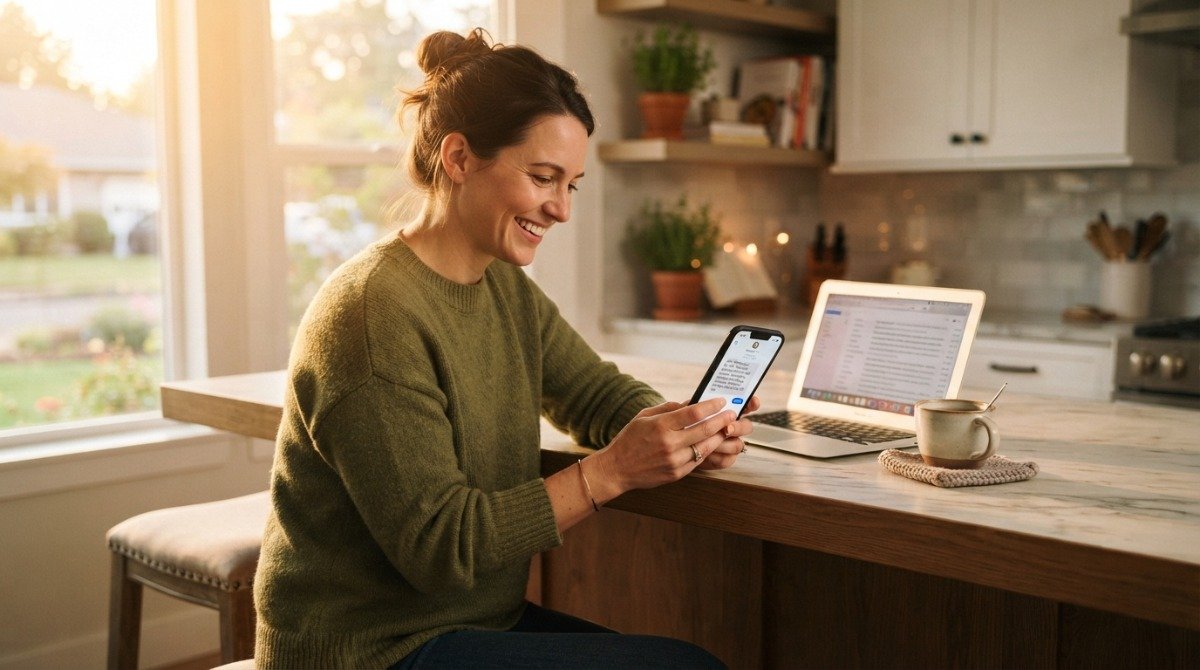
A homeowner fills out three quote forms on a Sunday evening. She wants her house painted before summer.
One company texts her back in under a minute and calls the next morning at 8. Another calls back Tuesday afternoon. The third never calls at all.
Guess who gets the estimate visit. She did not choose the best painter. She chose the first one who made her feel taken care of.
That is speed to lead. For home service businesses, it is one of the biggest reasons good companies lose jobs they should have won. Here is what it means, what the research actually says about the famous “5 minutes,” and how a small team can respond that fast without hiring a full office.
What Is Speed to Lead?
Speed to lead is the time between a new inquiry, like a call, a web form, a message, or an ad lead, and your first real response. In home services, the first business to respond usually gets the first conversation, and very often the job.
It is not about how fast you finish the estimate. It is about how fast the homeowner hears from a real business after reaching out.
Speed to Lead vs Response Time vs Time to First Call
These terms get used loosely, so here is how we think about them.
- Speed to lead: Time until the first meaningful contact, whether a text, a call, or a reply
- Response time: Often used the same way, sometimes measured only for calls
- Time to first call: Specifically when a person actually talks to the lead
A good system makes contact in seconds, then gets a real conversation going within minutes.
Why Do 5 Minutes Decide Who Wins the Job?
The “5 minute rule” gets quoted everywhere. A lot of the numbers floating around are mixed up, so let us get the research right.
What the Research Actually Says
There are two studies most people are really talking about.
The first is the Lead Response Management study led by Dr. James Oldroyd with InsideSales. It found that contacting a web lead within 5 minutes, instead of 30, made a company far more likely to reach the person, and around 21 times more likely to qualify them. That is where the 5 minute rule comes from.
The second is a 2011 Harvard Business Review article called “The Short Life of Online Sales Leads.” It found that companies that tried to contact leads within an hour were nearly seven times more likely to qualify them than companies that waited longer. It also found that many companies took more than a day to respond at all.
Both point in the same direction. Interest fades fast. The longer you wait, the less likely you are to even reach the person. This is a well known pattern across lead generation in general.
Why Home Services Make the Effect Stronger
If anything, home services feel this even more.
- Homeowners ask for several quotes. You are rarely the only company they contacted.
- Many problems are urgent. A leaking roof or a broken AC does not wait until Tuesday.
- Most searches happen on a phone. The next company is one tap away.
- Trust is the real decision. A fast, friendly reply is the first proof you are reliable.
Speed to Lead and Local Services Ads
There is another reason speed matters. Google says responsiveness is one of the factors that affects how Local Services Ads rank. Answer leads quickly, and you can show up more often. Ignore them, and your placement can suffer.
If you are wondering whether your trade qualifies, we covered it in our post on whether you are eligible for Google LSA.
The Homeowner’s Side of the Story
Think about it from her side. She just found a stain on the ceiling. She is stressed. She contacts three companies.
The one that replies right away says, without saying it, “We are paying attention.” That feeling carries all the way to the signed estimate.
How Fast Should You Respond to Each Type of Lead?
Not all leads arrive the same way. Here is the target for each.
Phone Calls
Answer live whenever possible. If you miss it, an automatic text should go out within 60 seconds, and you should call back as soon as you can.
Website Forms
An instant text or email confirming you got the request, then a phone call within 5 minutes during business hours.
Google Business Profile Messages and LSA Leads
Reply within minutes. These are watched closely and tied to how Google sees your responsiveness.
Meta Lead Forms
These leads cool off fast because people often submit them while scrolling. Text or call within minutes, while they still remember filling it out.
Shared Leads From Angi or Thumbtack
Seconds, not minutes. The same lead often goes to several companies. The first one to reach out has a real edge.
How to Measure Your Own Speed to Lead This Week
Before fixing anything, find out where you stand.
Submit a Test Lead to Yourself
Fill out your own website form from a different email and phone number. Note the exact time. Then wait and see what happens, and when.
Check Timestamps in Your CRM or Inbox
Look at your last 20 leads. Compare when each came in to when someone first replied. Calculate the average.
Look at After Hours and Weekends Separately
This is usually where the real problem hides. Leads at 9 pm on a Friday often wait until Monday morning. By then, the homeowner has talked to someone else.
Most owners we work with are surprised by what they find.
How to Respond in Under 5 Minutes With a Small Team
You do not need a big office. You need a system that makes the first contact for you, so you can make the real call.
Instant Text From Your Business Number
The moment a form comes in or a call is missed, a short text goes out in your voice. The homeowner knows you got the message and that a real person will follow up.
One Inbox and One Pipeline
Calls, texts, forms, Facebook leads, Google messages. All of it should land in one place. When leads are scattered across five apps, some always slip through.
Call Tasks and Alerts
Every new lead creates a task and sends an alert to whoever handles calls. Nobody has to remember. The system reminds them.
Here is how these pieces fit into one setup in our GoHighLevel snapshot for home service businesses.
AI Receptionist for After Hours and Overflow
When nobody can answer, an AI voice agent can pick up, ask the right questions, and book the estimate. This is where after hours and busy season leads get saved. You can see how ours works on our AI receptionist page.
Follow Up When They Do Not Answer
Not every lead replies right away. A simple sequence helps:
- Minute 1: Instant text
- Within 5 minutes: First call attempt
- Same day: Second text and call if no answer
- Day 2 and Day 4: Short check in texts
- Day 7: Final friendly message
Then stop, and add them to your past lead list for future outreach.
What Your First Message Should Say
Speed matters more than perfect wording. But good wording helps.
The Simple Formula
Your name, your company, your trade, one question, one next step.
Examples by Trade
- Roofing: “Hi, this is Dave from ABC Roofing. Got your request about the leak. Is water coming in right now? I’ll call you in a few minutes.”
- Painting: “Hi, this is Sarah from ABC Painting. Thanks for reaching out about your exterior. Is this a full repaint or touch ups? Calling you shortly.”
- Pressure washing: “Hi, it’s Mike at ABC Pressure Washing. What would you like cleaned? A photo helps us quote faster.”
- HVAC: “Hi, this is Jen from ABC Heating and Cooling. Is your system working at all right now? We’ll call you right back.”
- Cleaning: “Hi, this is Maria from ABC Cleaning. Thanks for your request. Are you looking for a one time clean or a regular schedule?”
What Not to Send
- “Your inquiry has been received and will be processed.” Nobody talks like that.
- Long messages with every service you offer
- A link to a booking page with no personal message
Also keep business texting rules in mind. Reply to people who contacted you, stay on topic, and always honor a STOP reply. The FCC’s page on the Telephone Consumer Protection Act covers the official rules.
The Lead Flow We Build for Service Businesses
For clients like Mr-Suds, a pressure washing company in Newington, Connecticut, we build the same core flow every time.
The First 60 Seconds
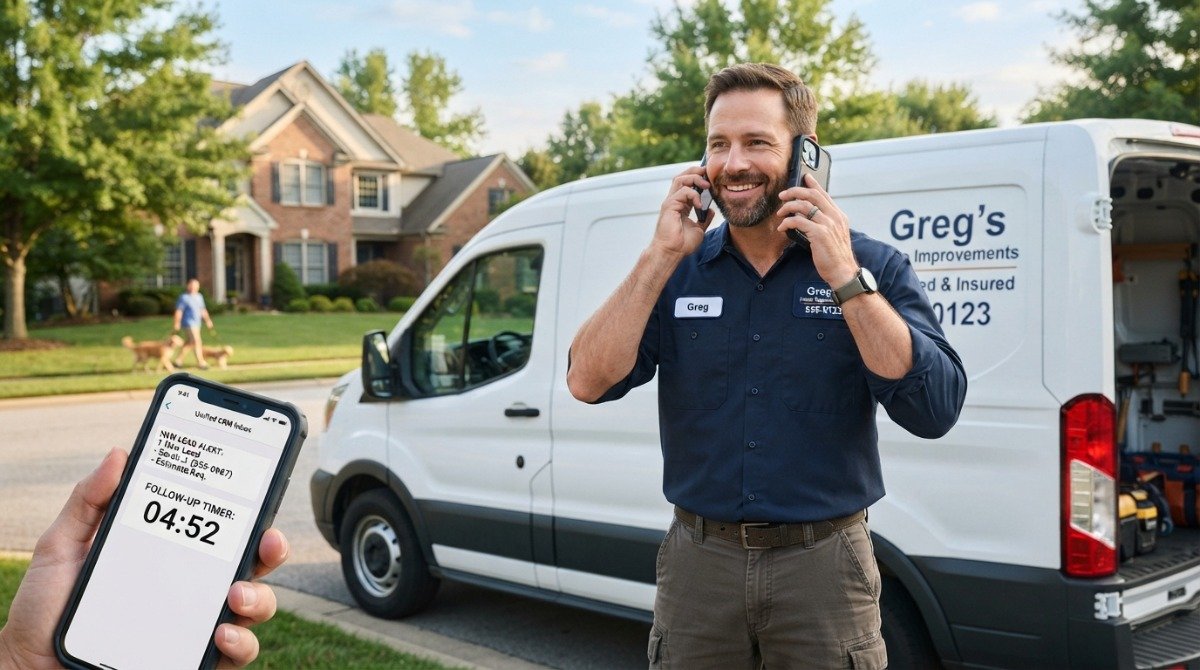
A form comes in or a call is missed. The system creates the contact, sends a text from the business number in the owner’s voice, and places the lead in the pipeline. The owner gets a notification on his phone.
The First 5 Minutes
The owner or office calls. If they are on a job, the text already did its work. The homeowner knows a real company is on it. Many reply to the text with exactly what they need, sometimes with a photo.
If the Homeowner Goes Quiet
The follow up sequence runs on its own. A second text, a reminder to call, a couple of check ins over the week. Nothing falls through the cracks just because the day got busy.
The owner still makes the real call. The system just makes sure nobody is left waiting in silence. In our experience, speed matters more than a perfect first message.
Speed to Lead Mistakes That Lose Jobs
Leads Landing in Five Different Places
Texts on one phone, emails in another inbox, Facebook messages in a third app. Something always gets missed.
Nobody Covers Evenings and Weekends
Many leads come in after 5 pm. If nobody responds until Monday, those leads are mostly gone.
Only One Follow Up Attempt
One call, no answer, done. Most homeowners need a few touches before they respond.
Fast Reply, Slow Estimate
Replying in a minute but sending the estimate a week later wastes the advantage. Keep the whole process moving.
If you are comparing ways to cover calls, our breakdown of AI receptionist vs answering service costs lays out the options.
Frequently Asked Questions
What is a good speed to lead for contractors?
Under 5 minutes for first contact is the goal. With automation, under 1 minute for a first text is very achievable, followed by a real call as soon as possible.
Does an automated text count as a response?
It counts as first contact, and it keeps the homeowner from moving on. But it should lead to a real conversation quickly. The text opens the door. You still have to walk through it.
What if a lead comes in at night?
Send an instant text that sets expectations, like “We’ll call you first thing in the morning.” For urgent trades, an AI receptionist can handle the conversation right away.
How many times should I follow up?
Usually five to seven touches over about a week, mixing texts and calls. After that, move them to your past lead list.
Does speed to lead affect Google Local Services Ads?
Yes. Google says responsiveness is one of the factors in how Local Services Ads rank.
What tools do I need to improve speed to lead?
A CRM that collects every lead in one place, automatic texting from your business number, task alerts, and optionally an AI receptionist for after hours.
Test Your Speed to Lead for Free
Most owners think they respond faster than they really do. The only way to know is to test it.
If you want, we will submit a test lead to your business and show you exactly what happens, minute by minute. Then we will talk through what would close the gap.
Reach out to our team and we will set up your test.