
Right now, someone in your town is typing “pressure washing near me,” and Google is showing them three businesses with stars, photos and a call button before anything else on the page. Getting into the Google Map Pack for pressure washing is the single highest-leverage move in this trade’s marketing, and this is the playbook for it.
What that box is worth: about 42 percent of searchers click map pack results on local queries, per Backlinko, and Whitespark’s 2025 research found local intent searches still show the local pack 93 percent of the time, even in the AI era. And one credibility line before we start: our client’s profile holds top 3 in that box for 8 of 10 of its service keywords in Newington CT. We are going to show you the exact playbook, including the market where we started from nothing.
How Do You Rank in the Google Map Pack for Pressure Washing?
To rank in the Google Map Pack for pressure washing, fully build your Google Business Profile with pressure washing as the primary category, list every service you offer, collect more and fresher reviews than the current top 3 in your town, keep your name, address and phone consistent everywhere, and support the profile with service pages on your website. Rankings typically move within 3 to 6 months.
That is the whole strategy in one paragraph. The rest of this article is the how, in priority order, with the proof at the end.
What Is the Map Pack and Why It Owns Near Me Searches
The Three-Spot Box Above Everything
The map pack, also called the local 3-pack, is the box of three businesses Google shows on local searches: a small map, then each business with its star rating, review count, photos, and call and directions buttons. Ads sometimes sit above or inside the map area, but the three organic spots are earned, not bought.
How Near Me Searches Actually Work
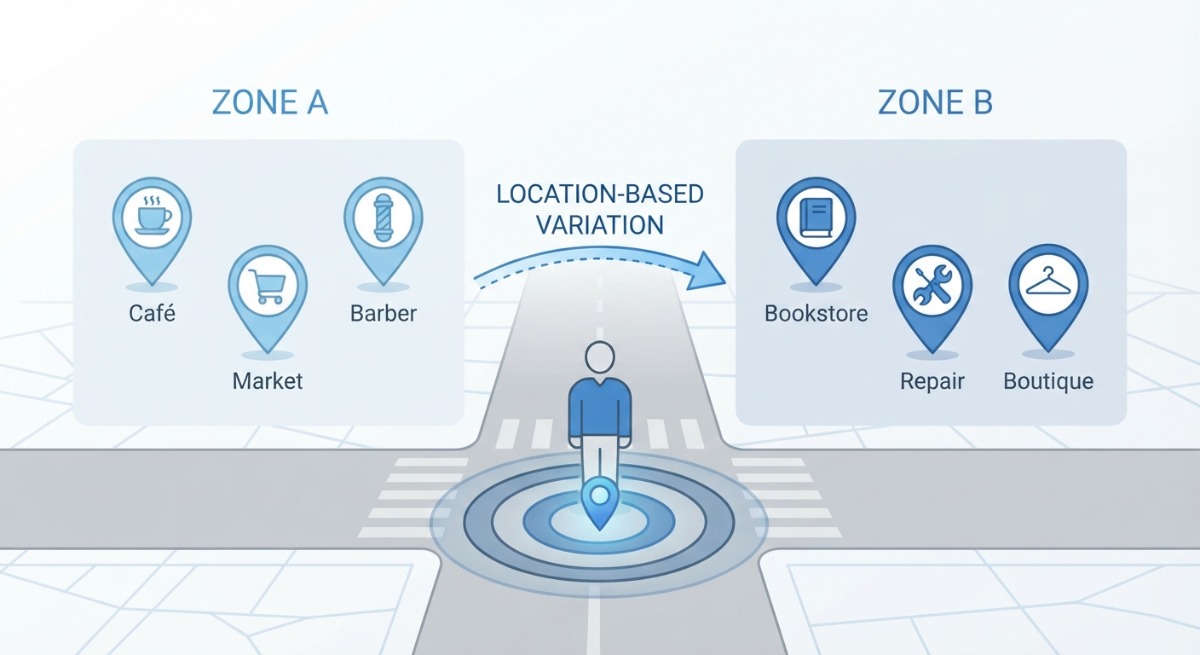
Google resolves “near me” from the searcher’s device location, which means the pack is different street by street. The three businesses shown in north Newington are not always the three shown near the Berlin line. Keep that in mind for later, because it explains both why you cannot trust searches from your own driveway and why rankings do not transfer between towns.
What the Data Says the Pack Is Worth
Three numbers tell the story. Backlinko’s analysis found 42 percent of local-query clicks go to map pack results. BrightLocal’s Local Consumer Review Survey 2026 found 97 percent of consumers read reviews for local businesses, and 71 percent use Google to do it. And Google itself has long reported that 46 percent of searches carry local intent.
Put together: nearly half of search is local, the pack takes the biggest share of those clicks, and reviews are the deciding read. Even as AI reshapes research queries, hiring searches still resolve here, which we covered in how AI Overviews are changing home service search in Connecticut.
The 3 Ranking Factors Google Admits (and How Much Each Really Weighs)
Google’s own local ranking documentation names exactly three factors: relevance, distance and prominence. Here is what each means and how much it weighs.
Relevance: Does Google Believe You Do This Service?
Relevance is whether your profile matches the search: your categories, your listed services, your profile content and the website behind it. It is fully in your control, and it fails silently: a profile with the wrong primary category is invisible for searches it should own. This is the identity work we broke down in entity SEO for contractors.
Distance: The Factor You Cannot Buy
Distance is the searcher’s proximity to your verified location, and no budget changes it. A Newington-based business ranks naturally in Newington and struggles in Hartford, whatever its reputation. Service area settings set what coverage your profile displays; they do not override proximity in ranking. Respect this factor and plan around it, because pretending it away is how owners waste years.
Prominence: Reviews, Mentions and a Site That Backs You Up
Prominence is how well-known and trusted your business looks: reviews, mentions across the web, citations and your website’s strength. And it can be quantified better than most guides bother to. In Whitespark’s Local Search Ranking Factors survey, practitioners attribute roughly a third of map pack ranking influence to Google Business Profile signals and around 16 percent to review signals, with on-page factors, links, citations and behavior making up the rest.
Read those weights again: about half of the controllable influence lives in your profile and your reviews. That is why the playbook below starts there.
The Map Pack Playbook: 10 Steps in Priority Order
Run these in order. Each step ends with what to do this week.
Step 1: Claim and Verify Your Google Business Profile
Everything starts here. Claim the profile at business.google.com, complete verification, and make sure no duplicate or old listings exist for your business. This week: search your business name plus your town and claim or clean up everything you find.
Step 2: Set Pressure Washing as Your Primary Category
Your primary category is the strongest single lever on the profile, and changing it is the most common fix we make on audits. Set Pressure washing service as primary, add relevant secondaries, then list every service: house washing, soft washing, driveway cleaning, roof cleaning, deck cleaning, fence washing, gutter cleaning, and commercial work, each with a short description. This week: audit your categories and add every missing service.
Step 3: Handle the Address Question for Service Area Businesses
Most washing companies run from home, and that is fine: Google’s rules let you hide the address and operate as a service area business. Set your service area towns honestly, know that your verified home base town remains your strongest market, and never invent an office address for a town you want; fake addresses get profiles suspended. This week: hide the address if you work from home, and set your real service towns.
Step 4: Beat the Current Top 3 on Reviews, Not a Magic Number
Forget “how many reviews do I need.” The real question is who currently holds your pack, and what it takes to out-earn them. Open the pack in your town and fill this in:
| Competitor in the pack | Review count | Rating | Last review date |
| Competitor 1 | |||
| Competitor 2 | |||
| Competitor 3 |
Your target is more, better and fresher than that table. Then build the system: ask on the driveway while the wow is fresh, text the review link before the truck leaves the street, and respond to every review with the service and town named naturally. Real customers, real jobs, no incentives, no gating. This week: benchmark your top 3 and ask your last five happy customers.
Step 5: Load Photos That Prove the Work
Before-and-after sets, the crew, the wrapped truck, the equipment, recognizable local scenes. Photos feed both the algorithm’s activity signals and the homeowner’s decision. This week: upload ten real job photos and set a weekly photo habit on every job.
Step 6: Lock Your NAP Everywhere
NAP is your name, address and phone, and Google cross-checks it across the web. The core citation set for this trade: Bing Places, Apple Maps, Yelp, Angi, Thumbtack, Nextdoor, BBB, your chamber of commerce and trade directories. One old listing with a dead number contradicts everything else. This week: search every phone number you have ever used and fix what disagrees.
Step 7: Build One Page Per Service on Your Website
The profile ranks; the website convinces and reinforces relevance. Every service on your profile should have a matching page on your site that answers what, where and roughly what it costs. Mr-Suds runs 18 live service pages, each mapped to a profile service, and that architecture is half the reason the relevance signals hold. Clean website structure makes this scale. This week: list profile services against site pages and note every gap.
Step 8: Add Town Pages Only Where You Actually Work
Service-plus-town pages (“house washing in Wethersfield”) reinforce relevance for real markets. The line to never cross: pages for towns you do not actually serve, thin duplicates with swapped town names, which Google treats as doorway spam. This week: build one honest town page for your strongest secondary market.
Step 9: Use Posts, Q&A and Services Updates to Stay Active
An active profile signals a living business. Post jobs and offers, seed the Q&A section with real customer questions and answers, and keep services and hours current, especially around the season. This week: publish one post and answer three common questions in Q&A.
Step 10: Track Positions on a Grid, Not From Your Own Driveway
Searching yourself from your own driveway lies to you, because proximity and personalization inflate your position. Grid tools like Local Falcon and similar map your rank across dozens of points in town; the free alternative is searching logged out from different spots around town and noting what changes. This week: check your positions from at least three locations before you conclude anything.
That is the playbook. If you want it run for you instead, that is exactly what our free growth audit covers.
How We Took Our Client to the Top 3 in Newington
Every agency article claims results. Here is ours, with an invitation no competitor makes: go check.
The Starting Point
Mr-Suds Power Washing PROs is a real pressure washing company in Newington CT, in the competitive Hartford suburb ring, and we run its Google presence. We applied the exact 10-step playbook above, without shortcuts: primary category locked, every service listed, 18 service pages built, 15 supporting articles published, weekly photos, and a review system worked on every completed job. The full program lives on our digital marketing for pressure washing companies in Connecticut page.
The Results You Can Check Right Now
Top 3 in the Newington map pack for 8 of 10 service keywords. Number 1 for house washing, soft washing and fence washing. A 5.0 rating built across 39 reviews, every one from a real completed job.
No single step produced that. The category fix made the profile eligible, the service pages gave relevance something to stand on, and the review system compounded week after week until the prominence side caught up. That is what the Whitespark weightings look like when they play out in one suburb: profile and reviews doing half the lifting, everything else reinforcing them.
Do not take our word for it. Open Google Maps, set your location to Newington CT, and search house washing, soft washing or fence washing. What you find in that box is the playbook above, running in public.
The Other Half of the Story: Hartford Started at Zero
Now the part a polished case study would hide. Hartford is the expansion market, one town over, and when we began, Mr-Suds had zero map pack presence there. Same company, same 5.0 reputation, invisible.
Why: distance and town-level prominence do not transfer. Google ranks the profile where it is located and where its proof lives, and all of the proof lived in Newington. Pack strength is earned per town, and no amount of strength in one town teleports to the next.
We are telling you this for a reason. Every case study you have ever read stops at the win, which is exactly why owners stop believing case studies. The Hartford zero is the same physics that put Mr-Suds in the Newington top 3, just pointed the other way, and understanding both halves is what makes the playbook usable in your market instead of ours.
What We Are Doing About Hartford (the Expansion Playbook in Motion)
The Hartford climb runs on the same playbook, pointed at a new town: jobs completed in Hartford, reviews that mention Hartford, Hartford service content on the site, and Hartford-relevant citations and local signals. It is work in progress with no promised outcome, and we are saying that in print on purpose.
If you are expanding into a second town, you are standing exactly where we are. The map pack is not rigged; it is earned per town, and we can prove both halves of that sentence.
How Long Does It Take (and What Progress Looks Like)
Honest ranges, matching what the better guides publish and what we see in practice. Profile fixes, categories and services, register within weeks. Review momentum and content compound over 3 to 6 months into position changes, and dense metros run longer. Budget planning for that window is its own topic, which we covered in the pressure washing marketing budget benchmarks.
Watch leading indicators weekly instead of staring at rankings: review velocity, profile actions like calls and direction requests, and your grid position spread tightening. Those move first; the pack position follows them.
Why You Might Still Be Stuck (5 Common Blockers)
When the playbook is running and nothing moves, one of these five is usually the reason.
Wrong primary category: the most common audit finding, and the fastest fix. Review drought: a strong rating with stale dates loses to fresher competitors, because recency is a signal. NAP conflicts: old addresses and dead numbers around the web split your identity. Spam competitors: keyword-stuffed business names (“Best Cheap Pressure Washing Newington LLC”) violate Google’s rules; report them through Google’s Business Redressal form, which is cleaning up the neighborhood, not revenge. A silent website: a site that never names your services or towns gives the profile nothing to stand on.
Diagnose in that order, fix what you find, and give each fix weeks, not days, to read.
FAQ: Google Map Pack for Pressure Washing
How do I get my pressure washing business into the Google Map Pack?
Claim and verify your Google Business Profile, set pressure washing as the primary category, list every service, out-review the current top 3 in your town, keep your name, address and phone consistent everywhere, and back the profile with service pages on your site. Consistency over months wins the spot.
How many reviews do I need to rank in the map pack?
There is no universal number. Open the pack in your town and note each top-3 competitor’s review count, rating and last-review date; your target is more reviews, a stronger rating and fresher activity than they have. In many suburbs that is dozens, not hundreds.
How long does it take to rank in the Google Map Pack?
Profile fixes register within weeks; meaningful position changes typically build over 3 to 6 months of review momentum and content, longer in dense metros. Watch leading indicators weekly: review velocity, calls and direction requests from the profile, and grid position spread.
Why is my business not showing in the map pack?
The usual blockers: a wrong primary category, too few or stale reviews, conflicting name and address data around the web, a website that never mentions your services or towns, or simple distance from the searcher. Diagnose in that order.
Does my address matter if I work from home?
Yes. Google ranks service area businesses partly by verified location even when the address is hidden, so your home base town is your strongest market. Hide the address, set honest service areas, and never invent an office; fake addresses get suspended.
Can I rank in the map pack in more than one town?
Only by earning presence in each town separately: jobs, reviews mentioning that town, content and citations there. Our own client is top 3 across Newington keywords yet started from zero in Hartford, one town over. Pack strength does not transfer.
Do Google ads help map pack rankings?
No. Ads can buy placement above or inside the map area, and Local Services Ads sit higher still, but paying Google does not move your organic pack position. The organic spots respond to relevance, distance and prominence only. We covered the paid layer separately in our guide to Google LSA for pressure washing.
What are the three Google Map Pack ranking factors?
Google names relevance (does your profile match the search), distance (how close you are to the searcher) and prominence (reviews, mentions, citations and the strength of your website). You control relevance and prominence; distance you respect and work around with per-town presence.
Want the Newington Playbook Run on Your Market?
We will check your live map pack positions across your towns, measure your review gap against the current top 3, and flag your category and consistency errors, free and in writing. Same method as this article, applied to your market, from the team that did it in Newington and is doing it again in Hartford.
Get Your Free Growth Audit
MR Web Solutions, Hartford CT. Call us at +1 860 255 1070.