By the MR Web Solutions team, Hartford, CT
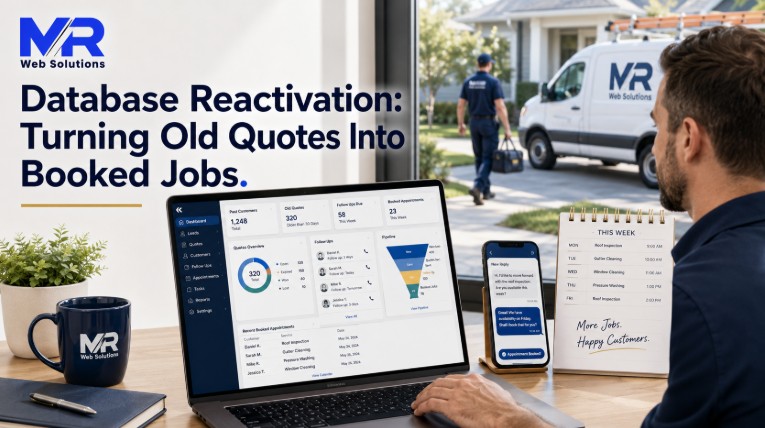
When we opened the Mr-Suds subaccount in our GoHighLevel CRM, the contact count read 474. Every one of those names had raised a hand at some point. A house wash quote in Newington. A gutter question from Wethersfield. A deck estimate that went quiet once summer got busy.
Nobody ignored them on purpose. The crew was on jobs, the phone kept ringing with new work, and the older quotes slid down the list.
That list is what database reactivation is about. It is the work of going back to people who already know your business, with a reason to reply now.
Most Hartford area contractors know the pattern. Quotes go out in May. By July there is silence. The season stays busy, then November turns slow, and those quotes are still sitting there.
This article walks through how we approach it for our clients: what database reactivation is, who belongs on the list, how to clean and split it, how to stay compliant in Connecticut, what to send and when, how to build it in GoHighLevel, who answers the replies, and what to measure.
What is database reactivation?
Database reactivation is the process of going back to contacts already in your CRM, such as unsold quotes and past customers, with a short, permission based sequence of texts, emails and calls that gives them a clear reason to reply now. For home service companies, it turns old estimates into booked jobs without buying new leads.
It matters more every year because new leads keep getting more expensive. If you have ever looked at what a new lead costs from Google Ads, the math is simple. The people already in your CRM were paid for once. Reactivation gets more out of that spend.
Why do quotes go quiet in the first place?
Most quiet quotes are not a "no." They are a "not right now" that nobody followed up on.
The reasons we see are ordinary:
- Timing. The homeowner wanted it done "later this season," then the season got away from them.
- No follow up. The quote went out, and nobody checked back.
- A faster competitor. Someone else called back first.
- Sticker shock. The price surprised them, and there was no easy way to talk it through.
- Life. Kids, work, a vacation, a broken car.
CHIIRP puts it well in its estimate follow up playbook: the customer was ready in the moment, but life interrupted. Straight North makes the same point in its guide to following up on home service quotes. Quotes rarely go cold because the customer chose someone else right away.
Connecticut seasons make this worse. Exterior work rushes in spring, schedules fill by summer, fall shifts to gutters and roofs, and winter slows almost everything down. A quote given in a busy May can easily drift until next year. If you are weighing reactivation against buying more ads, our post on how much to spend on marketing puts both in context.
Is an old quote a lost quote?
No. Most silence is undecided, not declined.
The key is to separate three groups. Contacts who went quiet are the ones to reactivate. Contacts who clearly declined should be thanked and left alone. Contacts who opted out must not be messaged at all. Only the first group belongs in a campaign.
Who belongs in a database reactivation campaign?
Two groups make up almost every good list. A few others should never be on it.
Unsold quotes and open estimates
These are people who received a price and never booked. They are your highest intent contacts, because they already wanted the work done.
In a CRM, they usually sit in pipeline stages like "estimate sent" or "lost, no response." Those are the first places we look.
Past customers due for repeat service
House washing every year or two. Gutters every fall. Decks and fences that need regular care. Roof cleaning on a cycle.
These reminders are often the easiest win, because the trust already exists. The customer has seen your work. You are just showing up at the right time.
Who should never be on the list?
- Anyone who opted out or is marked do not disturb (DND)
- Anyone who asked not to be contacted
- Wrong numbers
- Landlines, for text messages
- Purchased lists
- Contacts with no record of how you got their number
- Anyone with an open complaint
If you are unsure about a contact, leave them out. A smaller clean list beats a big messy one every time.
How do you clean and segment an old CRM list?
Before writing a single text, we sort the list. With Mr-Suds, that meant going through all 474 contacts before deciding who gets what.
What does a list cleaning checklist look like?
- Merge duplicate contacts
- Remove everyone who opted out or is marked DND
- Flag landlines so they get email or a call, not a text
- Remove email addresses that bounced
- Remove anyone already booked or with an active job
- Confirm where each contact came from and how they gave consent
- Fix first names, so messages do not start with "Hi Customer"
- Tag each contact by service
That last step is what makes everything else work. A contact tagged "gutter cleaning" gets a gutter message, not a generic one.
How should you split the list by service and age?
The message changes with the segment. Here is how we usually split a home service list:
| Segment | Example | Main reason to reply | First channel |
|---|---|---|---|
| Unsold quote, under 6 months | House wash quoted in spring | Still on the schedule this season | SMS |
| Unsold quote, 6 to 12 months | Deck cleaning quoted last summer | New season, same need | SMS, then email |
| Unsold quote, over 12 months | Roof cleaning quoted two years ago | Price and scope may have changed, offer a fresh look | Email first, SMS only with clear consent |
| Past customer, due for repeat | Gutter cleaning last October | Annual timing | SMS |
| Past customer, different service | House wash customer who never had gutters done | Add on while the crew is nearby | Email, then SMS |
Residential and commercial contacts also need separate handling, because they buy differently. We cover that in our post on residential and commercial funnels.
How big should each send batch be?
Send in small daily batches. That way the team can actually answer the replies, and carriers see steady traffic instead of a sudden blast. One GoHighLevel guide on database reactivation suggests batches of 50 to 100 contacts per day. That is one practitioner's suggestion, not a rule, but it is a sensible starting point.
Is database reactivation legal? What Connecticut businesses need to know about texting
This is the part most owners worry about, and with good reason. Done right, database reactivation is a normal service follow up. Done carelessly, it can cost real money.
This section is general information, not legal advice. For anything unusual, talk to an attorney.
What does the TCPA require for marketing texts?
The federal Telephone Consumer Protection Act (TCPA) governs calls and texts. The CTIA, the wireless industry group, recommends in its Messaging Principles that businesses get express written consent before sending marketing messages. Those principles are industry best practice, not law, but carriers follow them closely.
The stakes are real. Under 47 U.S.C. 227, people can sue for $500 per violation, and a court can award up to three times that for willful or knowing violations.
Federal rules also set a calling window. Under 47 CFR 64.1200, solicitation calls are not allowed before 8 a.m. or after 9 p.m. in the recipient's local time.
How do opt outs work now?
The rules here changed recently. Under 47 CFR 64.1200, people can revoke consent by any reasonable method. Replies like "stop," "quit" or "unsubscribe" count on their own. Businesses must honor the request within a reasonable time, no later than ten business days.
The same rule allows one confirmation text after an opt out, with no marketing in it. It is presumed fine if sent within five minutes.
A separate "revoke all" rule, which would apply one opt out across every type of message from a business, has been delayed. According to Brownstein Hyatt Farber Schreck, an FCC order on January 6, 2026 pushed that deadline to January 31, 2027.
Our practical rule is simpler than the law: treat any clear "stop" style reply as an opt out everywhere, right away.
What does Connecticut add on top of federal law?
Connecticut is stricter. Public Act 23-98 treats text messages as telemarketing. According to the Connecticut Office of Legislative Research, a telemarketer generally needs prior written consent from the consumer, with limited exceptions. Those exceptions include contacting an existing customer who has not asked you to stop, and responding to a consumer's own request.
The change took effect October 1, 2023, as TCPAWorld summarized at the time.
Connecticut also has a tighter time window than federal law. The CT Department of Consumer Protection says telemarketers may only call between 9:00 AM and 8:00 PM local time.
For Connecticut lists, we keep it simple: messages go out only between 9 a.m. and 8 p.m.
What is A2P 10DLC and do you need it in GoHighLevel?
A2P 10DLC is carrier registration for business texting from regular ten digit local numbers. Think of it as the carriers checking who you are and what you plan to send before they let your messages through.
Brands are verified through The Campaign Registry, and businesses cannot register with it directly. It happens through a provider. In GoHighLevel, the brand and campaign are registered for each subaccount.
Campaign registration asks for your use case, sample messages, a description of how people opt in, and your opt out wording. One GoHighLevel guide from GHL Experts says vetting typically takes three to seven business days, and longer at busy times. Unregistered texts get filtered or blocked.
That is why the first thing we checked in the Mr-Suds subaccount was its A2P status. No campaign should start before that box is green.
What about reactivation emails and the CAN SPAM Act?
Email has its own rules. The FTC's CAN SPAM compliance guide asks businesses to:
- Use honest "From" names and subject lines
- Identify the message as an ad
- Include a valid physical postal address
- Give a clear way to opt out, and honor it within ten business days
You stay responsible even if a vendor sends the email for you. Penalties can reach up to $53,088 per violating email, according to the FTC.
Compliance checklist before the first send
- A2P registration approved
- Consent source known for every SMS contact
- DND and opt outs respected
- Business named in the first text
- STOP wording included
- Send window set to 9 a.m. to 8 p.m. Connecticut time
- Email footer with a physical address and an unsubscribe link
- One person owns opt out handling
What should a reactivation text say?
The best reactivation texts sound like a real person from a real business. A few rules we follow:
- Name the business and the person
- Reference the real quote or service
- Ask one question
- No all caps, no fake urgency
- No links in the first text
- Include STOP wording
The messages below are examples to adapt, not messages we have sent with results. The names are made up.
Message 1: the honest check in
Hi Dana, this is the team at Mr-Suds Power Washing in Newington. We quoted your house wash back in May and we never followed up, sorry about that. Is it still on your list for this season? Reply STOP to opt out.
It is honest about the gap. That honesty is usually what gets a reply.
Message 2: the seasonal reason
Sent two to four days later, only if there was no reply:
Hi Dana, Mr-Suds here again. We are booking spring house washes in Newington and Wethersfield now. Want me to hold a spot near your street, or should I close out your quote?
The question gives two easy answers. Both are useful to you.
Message 3: the polite close
Sent about a week later:
Hi Dana, last note from Mr-Suds on your house wash quote. If timing is not right, no problem at all. Just reply LATER and we will check back in the fall.
This is the graceful exit Straight North describes. It respects the customer, and it often gets the reply the first two did not.
What should past customers get instead?
Past customers need a different message, because they already know you:
Hi Tom, this is Mr-Suds in Newington. Last October we cleaned your gutters in Wethersfield. Fall is coming up again. Want the same visit before the leaves drop? Reply STOP to opt out.
What makes a reactivation text look like spam?
- No business name
- A generic "Hey there"
- Links to unknown short URLs
- ALL CAPS
- Fake deadlines
- Emojis everywhere
- Sending at 10 p.m.
- More than four touches with no reply
How should reactivation emails work alongside texts?
Email carries what a text cannot: before and after photos, the original scope, an explanation of a maintenance plan, and a few reviews.
Two subject lines we like:
- "About your house wash quote from May"
- "Your gutters, one year later"
And a simple body structure:
- One sentence reminding them of the quote or past job
- One sentence on why now
- One proof element, like a photo or a review
- One clear reply or booking button
- A footer with your address and an unsubscribe link
Keep it short. A reactivation email is a nudge, not a newsletter.
What offers work for home service reactivation?
We lead with timing and convenience before price. Offers that work well:
- Route day pricing. "We are already on your street next Tuesday."
- Bundled add ons. Gutters with a house wash, while the crew is there.
- Priority spring booking. First pick of dates before the rush.
- A maintenance plan. One price, regular visits, no need to remember.
- A refreshed quote at last year's price, for a set window.
Be careful with deep discounts. They train customers to wait for the next sale, and they eat into margins you need in a short Connecticut season.
What does a Connecticut seasonal reactivation calendar look like?
| Window | Who to reach | Reason |
|---|---|---|
| Late February to March | Unsold house wash, deck and fence quotes | Book before the spring rush |
| April to May | Past house wash customers | Pollen and winter grime removal |
| July | Quiet summer quotes | Fill gaps in the schedule |
| September to October | Gutter and roof quotes, past gutter customers | Before leaves and nor'easters |
| November to January | Commercial and maintenance plan contacts | Plan next year, off season work |
For the commercial side of that winter window, our guide to commercial and HOA contracts in Connecticut goes deeper.
How do you build a database reactivation workflow in GoHighLevel?
Here is the database reactivation workflow we build, tied to a home service pipeline. It is part of the standard setup we use across client accounts. If you are still deciding on a system, our guide to choosing a CRM for a pressure washing business compares the main options.
Step 1: Tag and filter the segment
Tag the contacts for the campaign, for example "reactivation spring house wash." Then build a smart list for each segment. A smart list is a saved filter in GoHighLevel that keeps updating as contacts change. Exclude anyone marked DND.
Step 2: Set the trigger and send window
Start the workflow when the tag is added. Then add a time window so messages only go out between 9 a.m. and 8 p.m. If a contact is tagged at 9:30 p.m., the first text waits until morning.
Step 3: Add messages, waits and a reply branch
A simple sequence looks like this:
- SMS 1
- Wait two to four days
- If the contact replied, exit the sequence
- SMS 2
- Wait
- SMS 3
Any reply stops the sequence. Nobody wants a follow up text after they already answered.
Step 4: Move replies into the pipeline
When someone replies, create or move their opportunity to a stage like "reactivation replied." Assign it to a person, create a call task, and notify the owner by text or in the app. A reply that sits unseen is worse than no reply at all.
Step 5: Close the loop on everyone else
Tag non responders with something like "reactivation no reply" or "later fall." Schedule their next seasonal touch. Make sure opt outs are removed automatically.
What a finished workflow looks like
On screen, the finished workflow is a short line of boxes: a tag trigger, a time window, three texts and one email with wait steps between them, and a branch that sends any reply straight into the pipeline as a task. Simple enough that anyone on the team can read it.
If your CRM has a few hundred quiet quotes in it and you are not sure where to start, our free growth audit includes a look at your CRM and follow up setup. Get Your Free Growth Audit.
Who answers the replies?
This is the part most guides skip. Replies do not come in during office hours. They come in at dinner time, on Saturday mornings, and while the crew is on a ladder.
In our view, the reply layer matters more than the message copy. A perfect text that gets a reply nobody answers until Monday has done most of its work for nothing.
When should a person call back?
Any reply that asks about price, scope or dates gets a call the same day. A short call script works:
- Thank them for getting back to you
- Confirm the address and the scope
- Offer two time slots
- Book it in the calendar
- Send a confirmation text
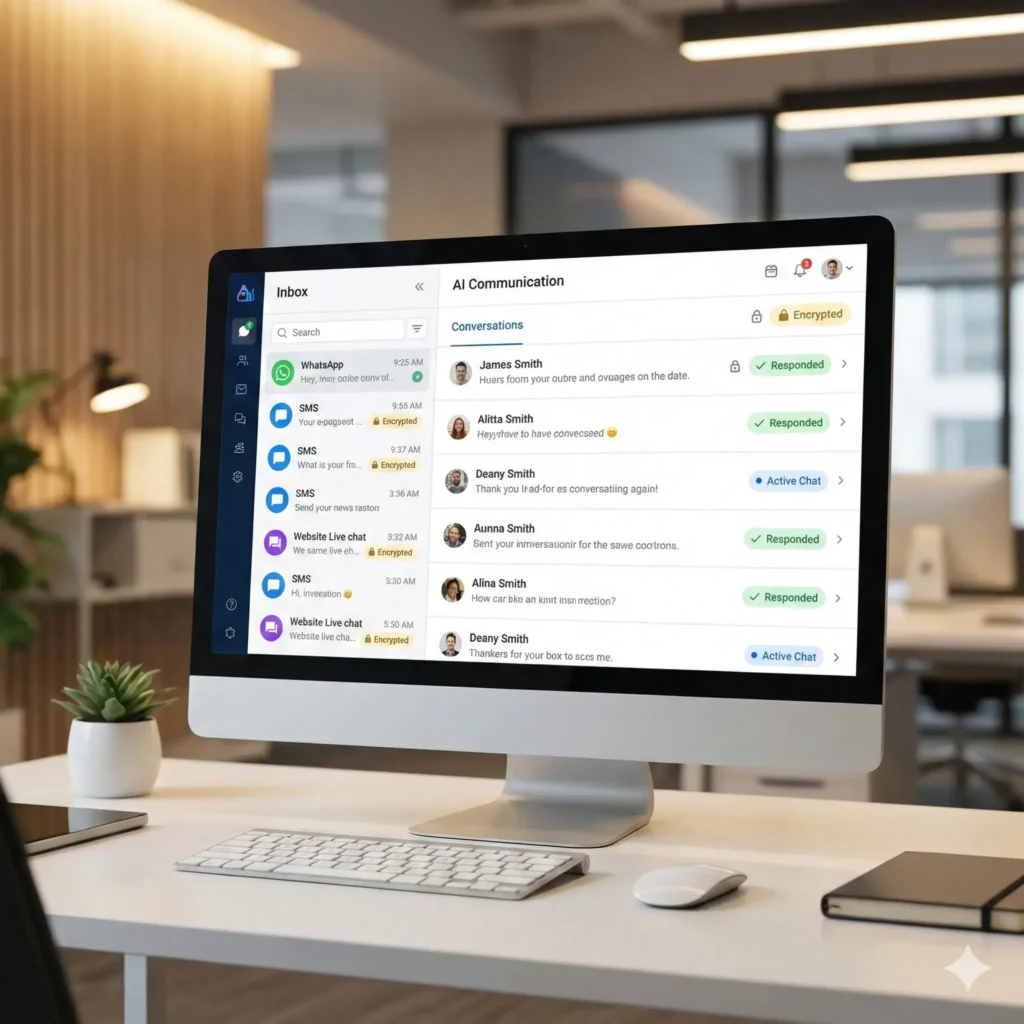
How does an AI receptionist handle reactivation replies?
Our AI Receptionist answers around the clock. It captures details, books into the calendar, sends confirmations and reminders, and logs everything to the CRM. The Growth plan adds AI follow ups and missed call recovery.
That matters for reactivation, because some people do not reply by text. They call the business number instead, often in the evening. When that happens, the call gets answered.
What should the AI never do?
- Argue with an opt out
- Promise a price it does not know
- Keep texting after STOP
- Handle a complaint instead of passing it to a person
How do you measure a database reactivation campaign?
Here is the honest truth: there is no audited industry benchmark for reactivation. Luxury Presence says plainly in its guide to database reactivation campaigns that no audited benchmark exists, so you have to build your own baseline.
These are the numbers we watch in a client pipeline like Mr-Suds:
| Metric | Definition | Where to find it in GoHighLevel |
|---|---|---|
| Delivered | Texts that reached the handset | Conversations and workflow stats |
| Reply rate | Contacts who replied divided by contacts messaged | Workflow branch counts |
| Positive reply rate | Replies showing interest divided by contacts messaged | A tag like "reactivation interested" |
| Opt out rate | STOP replies divided by contacts messaged | DND count for the segment |
| Booked job rate | Jobs booked divided by contacts messaged | "Won" stage with the reactivation tag |
| Revenue recovered | Value of won reactivation opportunities | Pipeline value report |
How long should you wait before judging results?
Use a fixed window, such as 30 days from the first send. Count only jobs tagged to the campaign. Otherwise it is too easy to credit the campaign for work that would have come in anyway.
What results are realistic?
We do not promise a number, because every list is different. What we can share is what vendors report:
- The Valley Marketing Group cites recovery of roughly 5 to 12 percent of dead estimates.
- EZ Transition reports that segments can convert at 5 to 15 percent when reactivated properly, based on its own experience.
- On Jobber's Masters of Home Service podcast, SendJim CEO Daniel Dixon described texting 270 old leads and closing $100K in jobs.
Treat these as what vendors and operators report, not as what any one list will produce. We track these numbers per client rather than quoting a promise.
Practical example: how we approach the Mr-Suds list in Newington and Hartford
Here is how we work through a list like the Mr-Suds one, step by step.
What we check first. Before any message is written, we confirm the subaccount's A2P status, where each contact came from (a website form with SMS consent wording, an inbound call, a Google Business Profile message), and who is already marked DND. Anything unclear stays out.
How we split the 474. Unsold quotes go in one group, past customers in another. Then each group splits by service, such as house washing, roof cleaning, gutters, decks and fences, and by quote age.
Which segment goes first. Fresh unsold house wash quotes, timed just before spring. That is when the reason to reply is strongest and the crew has room on the calendar.
Which messages fit. The honest check in, the seasonal reason and the polite close, adjusted for each town, whether that is Newington, Wethersfield, Rocky Hill, Hartford or Glastonbury.
How replies are handled. Warm replies get a same day call from the crew. After hours calls are covered by the AI receptionist, and every reply lands in the pipeline as a task.
What we measure. Reply rate, opt outs, booked jobs and revenue, inside a fixed 30 day window.
We are describing the approach here, not claiming results. The point is that the list already exists. The work is in handling it carefully. For the wider marketing picture, see our page on marketing for pressure washing companies in Connecticut.
What would we do differently for a cleaning or roofing company?
The same system works across trades. Only the reason to reply changes:
- Cleaning: recurring service reminders and move out season
- Roofing: storm season and inspection offers
- HVAC: spring AC tune ups and fall heating checks
Database reactivation do's and don'ts checklist
| Do | Don't |
|---|---|
| Name the business in every first text | Text purchased lists |
| Reference the real quote or past job | Hide the opt out |
| Send between 9 a.m. and 8 p.m. | Use fake deadlines |
| Send in small daily batches | Keep sending after STOP |
| Answer replies fast | Blast everyone the same message |
| Track booked jobs, not just replies | Judge results without a fixed window |
Frequently asked questions
What is a database reactivation campaign?
It is a planned sequence of texts, emails and calls sent to contacts already in your CRM, mainly unsold quotes and past customers. Each message gives them a clear reason to reply now, such as the new season or a slot near their street, so old leads turn into booked jobs without buying new ones.
How long after a quote should I follow up?
The first follow up should come within a few days of sending the quote. For older quotes that already went quiet, time your outreach to the next natural season, such as late winter for spring house washing or early fall for gutters, so the message has a real reason behind it.
Is it legal to text old customers in Connecticut?
It can be, with the right consent. Connecticut treats texts as telemarketing and generally requires prior written consent, with limited exceptions such as existing customers who have not opted out. Send only between 9 a.m. and 8 p.m. This is general information, not legal advice.
Do I need A2P 10DLC to text from GoHighLevel?
Yes, for business texting from local ten digit numbers. Your brand and campaign need to be registered and approved through your provider. Without it, carriers filter or block your messages. Approval commonly takes several business days, so register well before any campaign starts.
How many messages should I send to an old lead?
Three to four touches is usually enough, spread across texts, an email and a phone call when someone replies. End with a polite closing message that gives them an easy way to say "later." More than that, with no reply, starts to feel like pressure rather than service.
How old is too old for a quote?
There is no fixed cutoff if consent is clear. But quotes over 12 months old usually need a fresh look, because prices and the property may have changed. For those, we start with email, offer a new quote, and only text when consent is clearly documented.
Should I offer a discount?
Try timing and convenience offers first: route day pricing, bundled add ons, priority booking or a maintenance plan. If you do offer a discount, give it a clear end date. Deep or open ended discounts teach customers to wait for the next deal.
What is a good reply rate?
There is no audited benchmark for reactivation. Vendors report recovering roughly 5 to 15 percent of old estimates in some cases, but every list is different. Measure your own reply rate, opt out rate and booked job rate within a fixed window, then improve from there.
Can AI answer reactivation replies?
Yes. An AI receptionist can reply, answer basic questions, book into the calendar and log every conversation to the CRM, including after hours. A person should still handle detailed pricing questions and anything that sounds like a complaint.
What should I do when someone replies STOP?
Stop all marketing texts to that person right away. Federal rules allow one confirmation text with no marketing, presumed fine within five minutes, and require honoring the request within ten business days. In practice, we treat it as immediate and permanent.
Ready to turn your old quotes into booked jobs?
Your CRM probably already holds more opportunity than your next ad campaign. Database reactivation is how you reach it, carefully and within the rules.
If you would like us to build the GoHighLevel reactivation workflow for you, Book a Free Growth Call. If the worry is who answers the replies, Start your 14 day free trial of our AI Receptionist. Or ask for a free growth audit of your current setup, and read what our clients say first.
Call us at +1 (860) 255 1070, or visit our office at 375 Wethersfield Ave, Hartford, CT 06114.